

 Facebook
 X
X
 Pinterest
 Copy Link
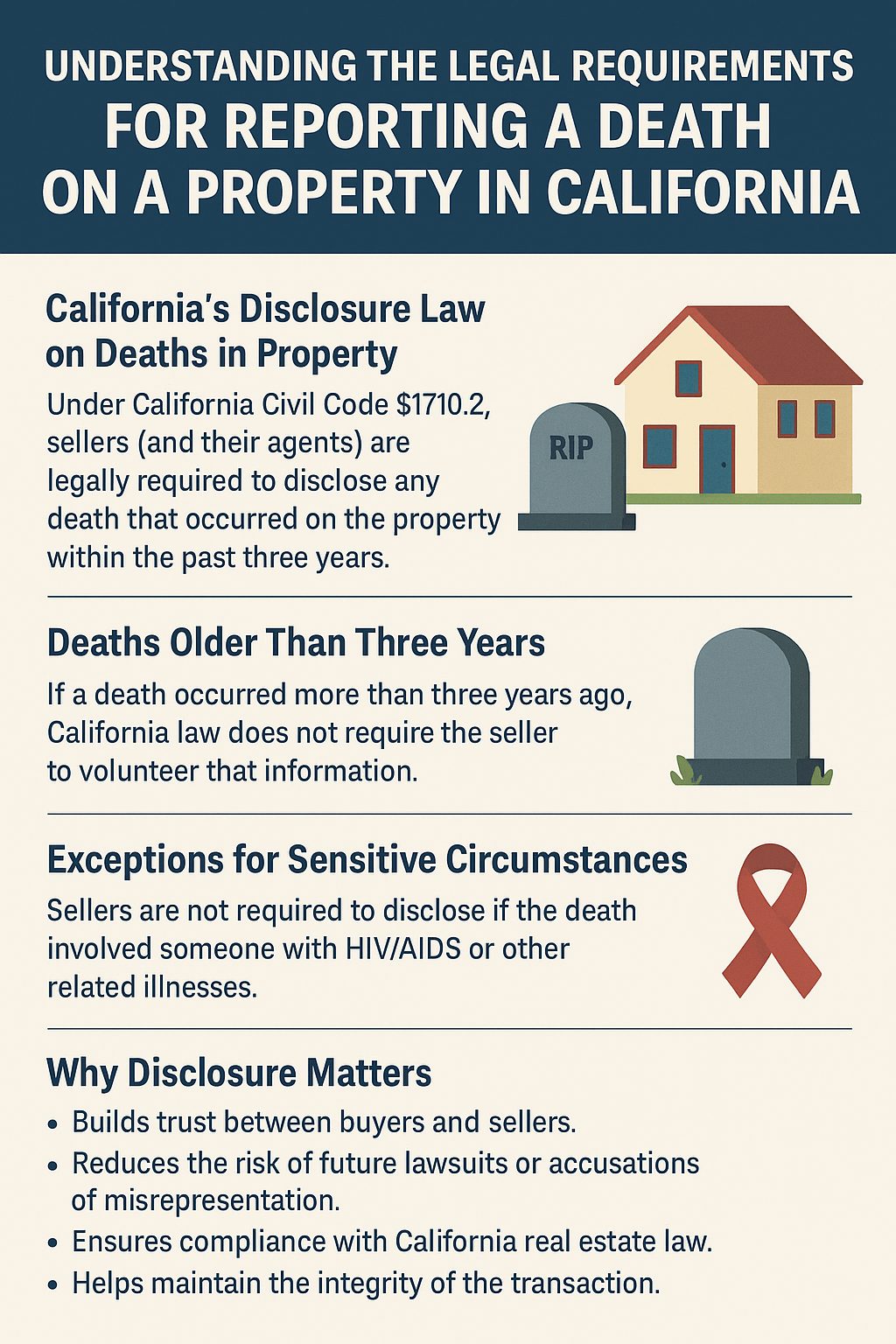 🏠 Understanding the Legal Requirements for Reporting a Death on a Property in California
When selling a home in California, one of the most common questions that arises—especially from buyers—is: “Does the seller have to disclose if someone died in the house?” Deaths in a property can raise emotional, cultural, and even financial concerns for potential buyers. As a seller or real estate professional, it’s essential to understand the state’s disclosure laws to stay compliant and maintain transparency.
California’s Disclosure Law on Deaths in Property
Under California Civil Code §1710.2, sellers (and their agents) are legally required to disclose any death that occurred on the property within the past three years.
This applies regardless of whether the death was from natural causes, an accident, suicide, or homicide.
The key points are:
- Three-Year Rule: Any death that took place within three years prior to the sale must be disclosed to potential buyers.
- How to Disclose: The disclosure should be made in writing and typically included as part of the seller’s disclosure statements (such as the Transfer Disclosure Statement or Seller Property Questionnaire).
- Agent Responsibility: Real estate agents must ensure that the seller provides this information to buyers and should never attempt to conceal such facts.
Deaths Older Than Three Years
If a death occurred more than three years ago, California law does not require the seller to volunteer that information.
However, if a buyer specifically asks whether anyone has ever died on the property—no matter how long ago—it’s legally required that the seller and agent answer truthfully.
Failing to do so could be considered fraudulent concealment and may result in legal action later.
Exceptions for Sensitive Circumstances
Sellers are not required to disclose if the death involved someone with HIV/AIDS or other related illnesses, as this information is protected under California’s anti-discrimination and privacy laws.
Why Disclosure Matters
Being upfront about a death on the property:
- Builds trust between buyers and sellers.
- Reduces the risk of future lawsuits or accusations of misrepresentation.
- Ensures compliance with California real estate law.
- Helps maintain the integrity of the transaction.
Best Practices for Sellers and Agents
- Be Honest and Transparent: Always err on the side of disclosure when in doubt.
- Document Everything: Put disclosures in writing and keep copies for your records.
- Prepare for Buyer Reactions: Some buyers may be uncomfortable, while others may not care. Transparency helps manage expectations early.
- Consult a Real Estate Professional: An experienced local agent can guide you through the disclosure process and ensure all forms are properly completed.
Final Thoughts
Selling a home in California comes with a responsibility to provide accurate and honest information—including whether a death occurred on the property in the past three years. While this can sometimes feel uncomfortable to discuss, following the law and maintaining transparency ultimately protects everyone involved in the transaction.
If you’re considering selling your home or have questions about disclosure requirements, I can help guide you through the process.
👉 Find out your home’s current value here.
Steve Cardinalli
Real Estate Professional, 01323509
(760) 814-0248
Steve@Cardinalli.com
www.Cardinalli.com
Century 21 Affiliated Fine Homes & Estates
Village Faire in Carlsbad Village
300 Carlsbad Village Dr, 223
Carlsbad, CA 92008
Be the first to know about the market trend in your community at Neighborhood News


