

 Facebook
 X
X
 Pinterest
 Copy Link
Low-Rise vs. Mid-Rise vs. High-Rise Buildings: What’s the Difference?
When buyers and sellers talk about condos or multifamily buildings, you’ll often hear the terms low-rise, mid-rise, and high-rise. While they may sound interchangeable, each building type offers a unique lifestyle, set of amenities, and market value considerations. Here’s a clear breakdown to help your clients (and you!) understand the differences.
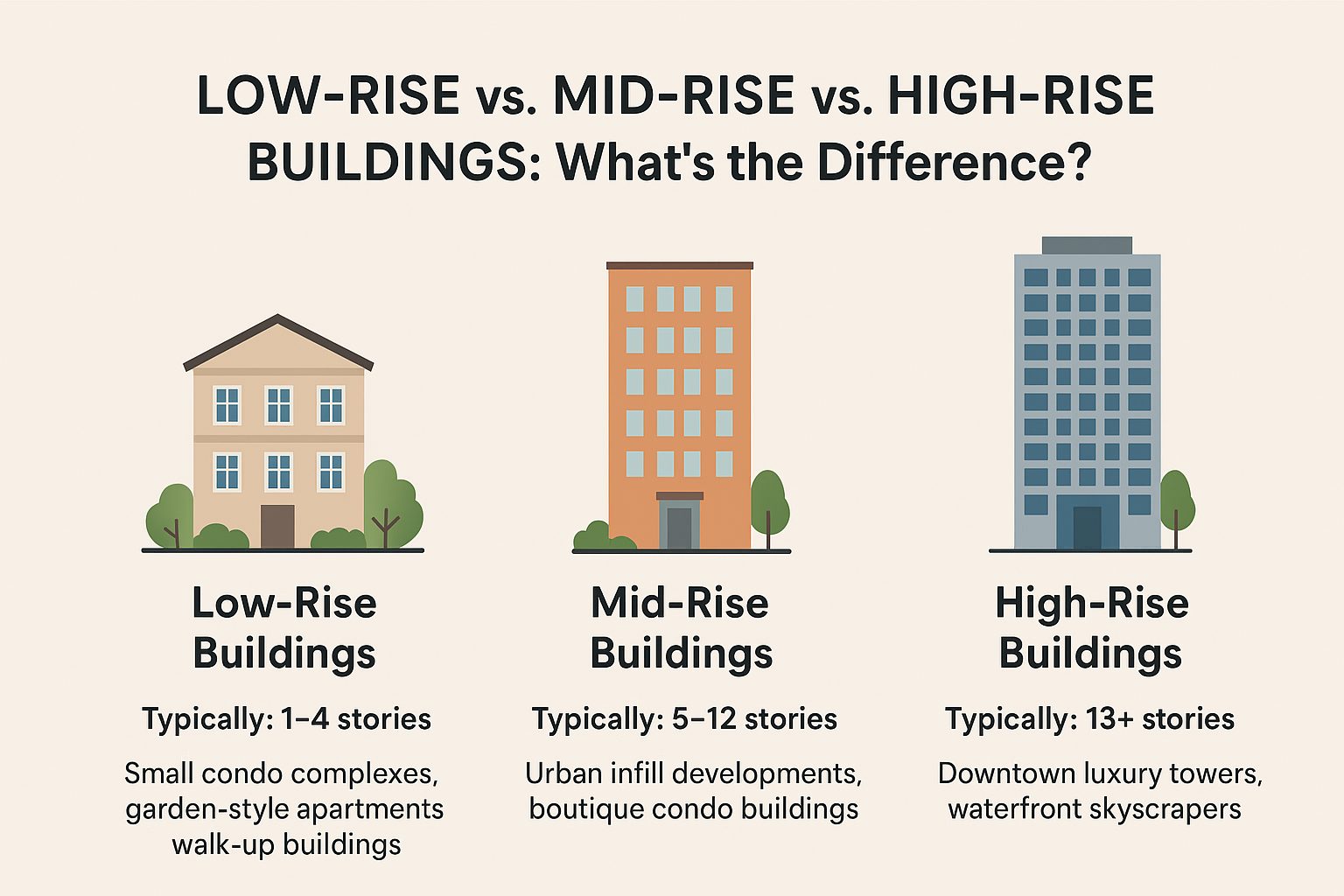
🌿 Low-Rise Buildings
Typically: 1–4 stories
Examples: Small condo complexes, garden-style apartments, walk-up buildings
Key Features
- Often no elevators (although some newer ones may have them)
- More residential and suburban feel
- Easier access to units—great for those who want fewer stairs or prefer outdoor entry
- Generally lower HOA fees due to fewer amenities
- Less density = quieter living environment
Who They Appeal To
- First-time buyers
- Those who prefer privacy and fewer neighbors
- Buyers seeking a townhome-like environment with simple amenities
🏙️ Mid-Rise Buildings
Typically: 5–12 stories
Examples: Urban infill developments, boutique condo buildings
Key Features
- Usually equipped with elevators
- Often offer moderate amenities—lobbies, gyms, shared patios, or rooftop decks
- A balance between walkability and comfort
- More units than low-rise, but not as dense as high-rises
Who They Appeal To
- Buyers who want urban convenience without the high-rise feel
- Professionals seeking a central location with manageable HOA fees
- Those who enjoy shared amenities without overwhelming crowds
🏢 High-Rise Buildings
Typically: 13+ stories
Examples: Downtown luxury towers, waterfront skyscrapers
Key Features
- Elevators, doormen, concierge, and enhanced security
- Extensive amenities such as pools, fitness centers, lounges, and business centers
- Higher HOA fees due to services and staffing
- Stunning views and prime locations, often near transit, entertainment, and employment centers
Who They Appeal To
- Luxury buyers and investors
- Professionals wanting a walkable, urban lifestyle
- Clients seeking premium amenities and skyline or ocean views
How Building Type Impacts Value
- Location: High-rises dominate dense urban cores; low-rises fill suburban areas.
- HOA Fees: Higher stories typically mean higher fees due to amenities and staffing.
- Market Demand: Each type attracts a different buyer pool, impacting resale value.
- Lifestyle Considerations: Noise, parking, pet policies, and accessibility differ widely.
Bottom Line
Understanding the difference between low-, mid-, and high-rise buildings helps buyers choose the lifestyle that fits their needs—and helps sellers better position their property. Whether it’s the quiet comfort of a low-rise or the luxury convenience of a high-rise tower, each type has unique benefits that shape the living experience.
Steve Cardinalli
Real Estate Professional, 01323509
(760) 814-0248
Steve@Cardinalli.com
www.Cardinalli.com
Century 21 Affiliated Fine Homes & Estates
Village Faire in Carlsbad Village
300 Carlsbad Village Dr, 223
Carlsbad, CA 92008
Be the first to know about the market trend in your community at Neighborhood News


