

 Facebook
 X
X
 Pinterest
 Copy Link
The Most Dangerous DIY Home Improvement Projects
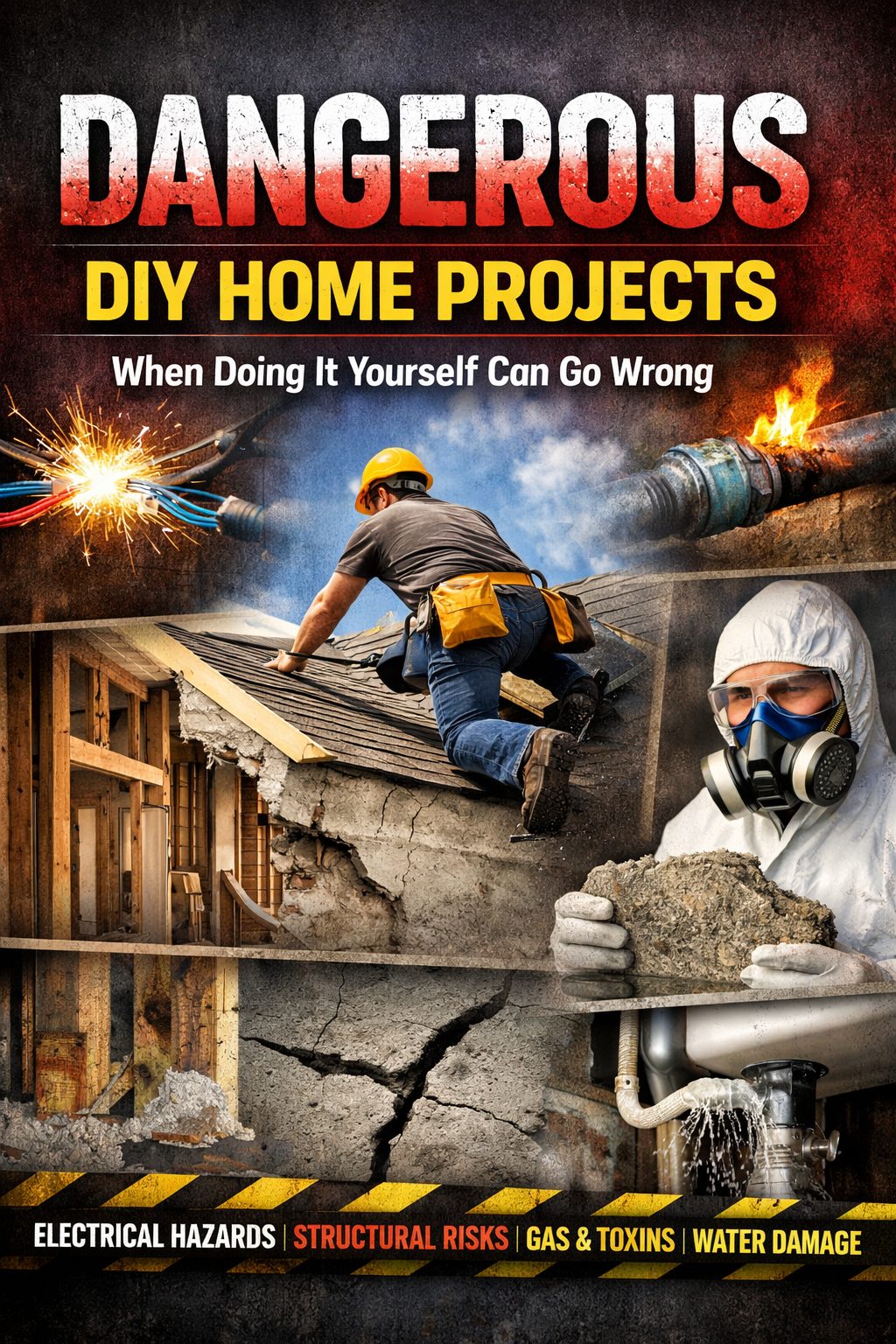
When “Do-It-Yourself” Can Cost You More Than Money
DIY home improvement shows and social media make renovations look fast, cheap, and easy. But in real estate, some DIY projects can be genuinely dangerous—and can also damage a home’s value, insurability, or marketability. Whether you’re a homeowner planning upgrades or a buyer evaluating past work, these are the most dangerous DIY projects and why they’re often better left to licensed professionals.
1. Electrical Work
Risk level: Extremely high
DIY electrical projects are one of the leading causes of residential fires. Improper wiring, overloaded circuits, or incorrect grounding can create hidden hazards behind walls.
Common DIY mistakes:
- Adding outlets without proper permits
- Incorrect breaker sizing
- Aluminum-to-copper wiring errors
Real estate impact:
Unpermitted or unsafe electrical work can fail inspections, delay escrows, and require costly repairs before closing.
2. Structural Wall Removal
Risk level: Extremely high
Removing walls without understanding load paths can compromise the entire structure of a home.
Hidden dangers:
- Sagging ceilings or roofs
- Cracked foundations
- Long-term structural instability
Real estate impact:
Structural alterations without engineering approvals can dramatically reduce a home’s value—or make it unfinanceable.
3. Roofing Repairs
Risk level: High
Roofing is one of the most physically dangerous DIY projects due to falls, but poor workmanship can also lead to serious water damage.
Common issues:
- Improper flashing
- Incorrect shingle installation
- Voided manufacturer warranties
Real estate impact:
A poorly repaired roof can trigger red flags during inspections and shorten the roof’s perceived remaining life.
4. Gas Line Work
Risk level: Life-threatening
DIY gas work is never recommended. Even small errors can result in leaks, explosions, or carbon monoxide poisoning.
Real estate impact:
Homes with unpermitted gas modifications may be denied insurance coverage and face mandatory repairs before a sale.
5. Major Plumbing Modifications
Risk level: High
While minor plumbing repairs may be manageable, major rerouting or drain work can cause hidden leaks and mold.
Common DIY problems:
- Improper slope on drain lines
- Incorrect venting
- Hidden water damage behind walls
Real estate impact:
Water damage is one of the biggest value killers in real estate and can surface during inspections or appraisals.
6. Foundation Repairs
Risk level: Very high
Foundation issues require specialized engineering knowledge. DIY fixes often mask symptoms instead of solving the problem.
Real estate impact:
Foundation problems—especially poorly repaired ones—can scare off buyers and significantly reduce property value.
7. Asbestos or Lead Paint Removal
Risk level: Serious health hazard
Homes built before 1980 may contain asbestos or lead-based paint. Improper removal releases dangerous particles into the air.
Real estate impact:
Improper handling can create liability issues and require professional remediation before a sale.
8. HVAC Installation or Modification
Risk level: Moderate to high
Incorrect HVAC installation can reduce efficiency, increase fire risk, and shorten system life.
Real estate impact:
Non-permitted HVAC work may affect energy efficiency ratings, inspections, and buyer confidence.
The Real Estate Takeaway
DIY projects can save money—but dangerous DIY projects can cost far more in repairs, liability, and lost value. In many cases, buyers aren’t just purchasing a home; they’re inheriting the quality of past work.
Rule of thumb:
If a project involves structure, electricity, gas, water, or safety systems, it’s best handled by licensed professionals with permits.
Steve Cardinalli
Real Estate Professional, 01323509
(760) 814-0248
Steve@Cardinalli.com
www.Cardinalli.com
Century 21 Affiliated Fine Homes & Estates
Village Faire in Carlsbad Village
300 Carlsbad Village Dr, 223
Carlsbad, CA 92008
Be the first to know about the market trend in your community at Neighborhood News


