

 Facebook
 X
 Pinterest
 Copy Link
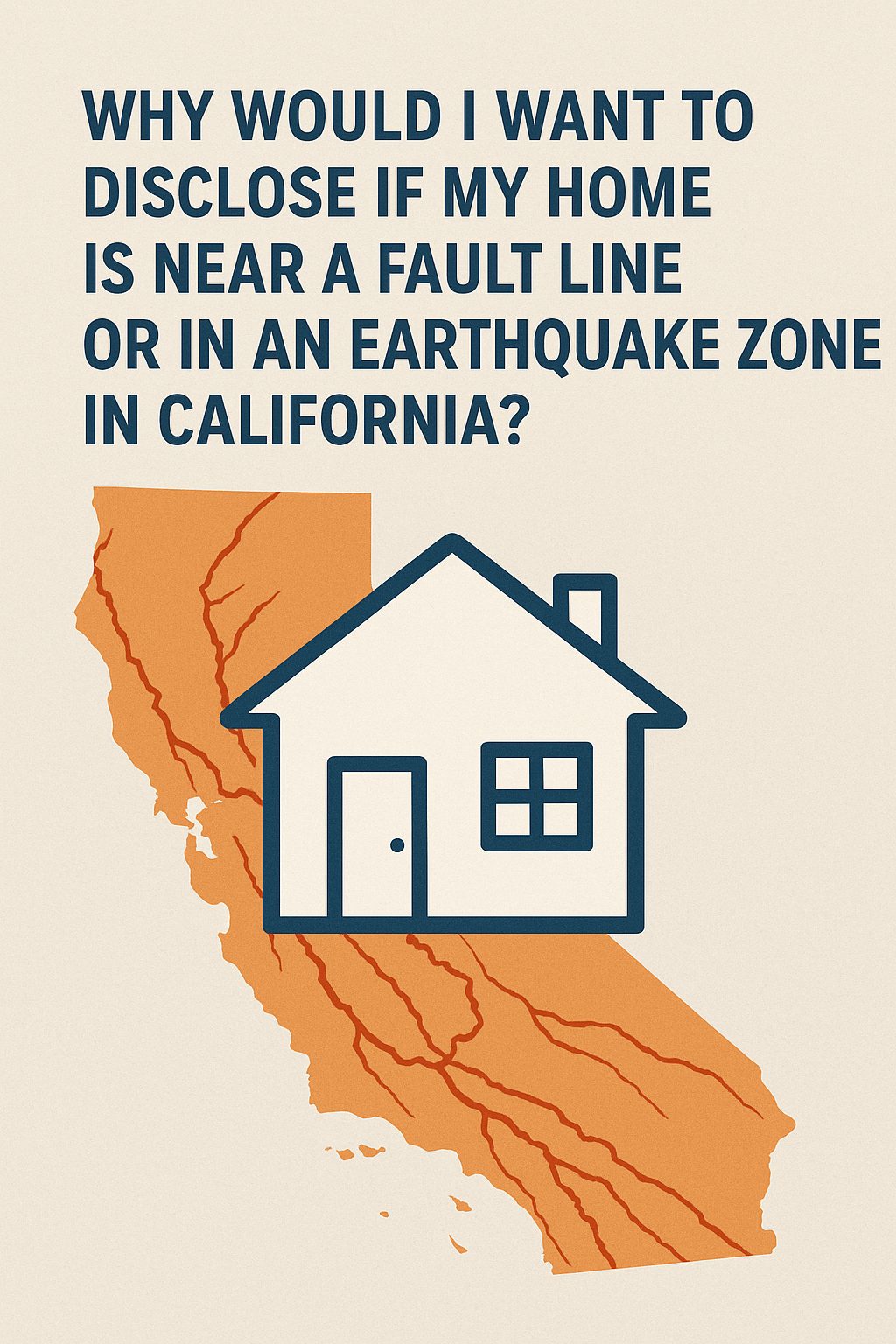 Why You Should Disclose If Your Home Is Near a Fault Line or in an Earthquake Zone in California
When selling a home in California, transparency isn’t just good practice—it’s the law. One of the most important disclosure requirements involves whether your property is located near a fault line or within an earthquake hazard zone. But even beyond legal compliance, there are solid reasons why being upfront about this information can actually benefit you as a seller.
Understanding Fault and Earthquake Zones
California sits on the Pacific Ring of Fire, making it one of the most seismically active regions in the world. The state has mapped out two major hazard designations:
- Earthquake Fault Zones – Areas where active faults could cause surface ruptures.
- Seismic Hazard Zones – Areas more likely to experience ground shaking or liquefaction during an earthquake.
These zones are detailed in the Natural Hazard Disclosure Statement (NHD) that sellers must provide to potential buyers.
1. It’s the Law
Under California law (specifically the Natural Hazard Disclosure Act), sellers are required to disclose if their property lies within a mapped earthquake or fault zone. Failing to do so can lead to legal and financial consequences, including the risk of lawsuits or canceled sales if the buyer later discovers undisclosed hazards.
2. Protects You From Future Liability
By disclosing upfront, you protect yourself from potential claims of misrepresentation. Buyers have successfully sued sellers in the past for not providing this information—especially when damage occurred after the sale. A complete and honest disclosure helps demonstrate good faith and shields you from future disputes.
3. Builds Buyer Trust
Real estate transactions run smoother when buyers feel they can trust the seller. Being open about earthquake risk shows integrity and professionalism. Most buyers in California are aware of earthquake activity, so hearing this information directly from you—backed by proper documentation—often strengthens confidence rather than scaring them off.
4. Many Buyers Expect It
In today’s informed market, buyers can easily access public data and natural hazard reports. Trying to hide or downplay fault zone information can backfire if a buyer finds it elsewhere. When you provide accurate disclosures early, you set realistic expectations and prevent last-minute surprises that could derail negotiations.
5. It Can Lead to Faster, Cleaner Sales
Full disclosure often means fewer delays during escrow. When everything is transparent from the start, buyers are less likely to withdraw offers or demand repairs after reviewing inspection and hazard reports. Sellers who disclose properly typically enjoy smoother closings and reduced stress.
6. Buyers Can Take Preventive Measures
When buyers know a home is near a fault or in a seismic hazard zone, they can plan accordingly—by reinforcing foundations, securing heavy furniture, or purchasing appropriate earthquake insurance. By helping them make informed choices, you demonstrate care and professionalism, which can translate into goodwill and stronger offers.
Final Thoughts
Disclosing that your home is near a fault line or within an earthquake zone isn’t just a legal requirement—it’s smart real estate practice. It protects you from liability, builds buyer trust, and keeps the sale process transparent and efficient.
In California, where earthquakes are simply part of life, honesty about seismic risks isn’t a deal-breaker—it’s a sign of integrity that helps both parties move forward with confidence.
Steve Cardinalli
Real Estate Professional, 01323509
(760) 814-0248
Steve@Cardinalli.com
www.Cardinalli.com
Century 21 Affiliated Fine Homes & Estates
Village Faire in Carlsbad Village
300 Carlsbad Village Dr, 223
Carlsbad, CA 92008


