

 Facebook
 X
X
 Pinterest
 Copy Link
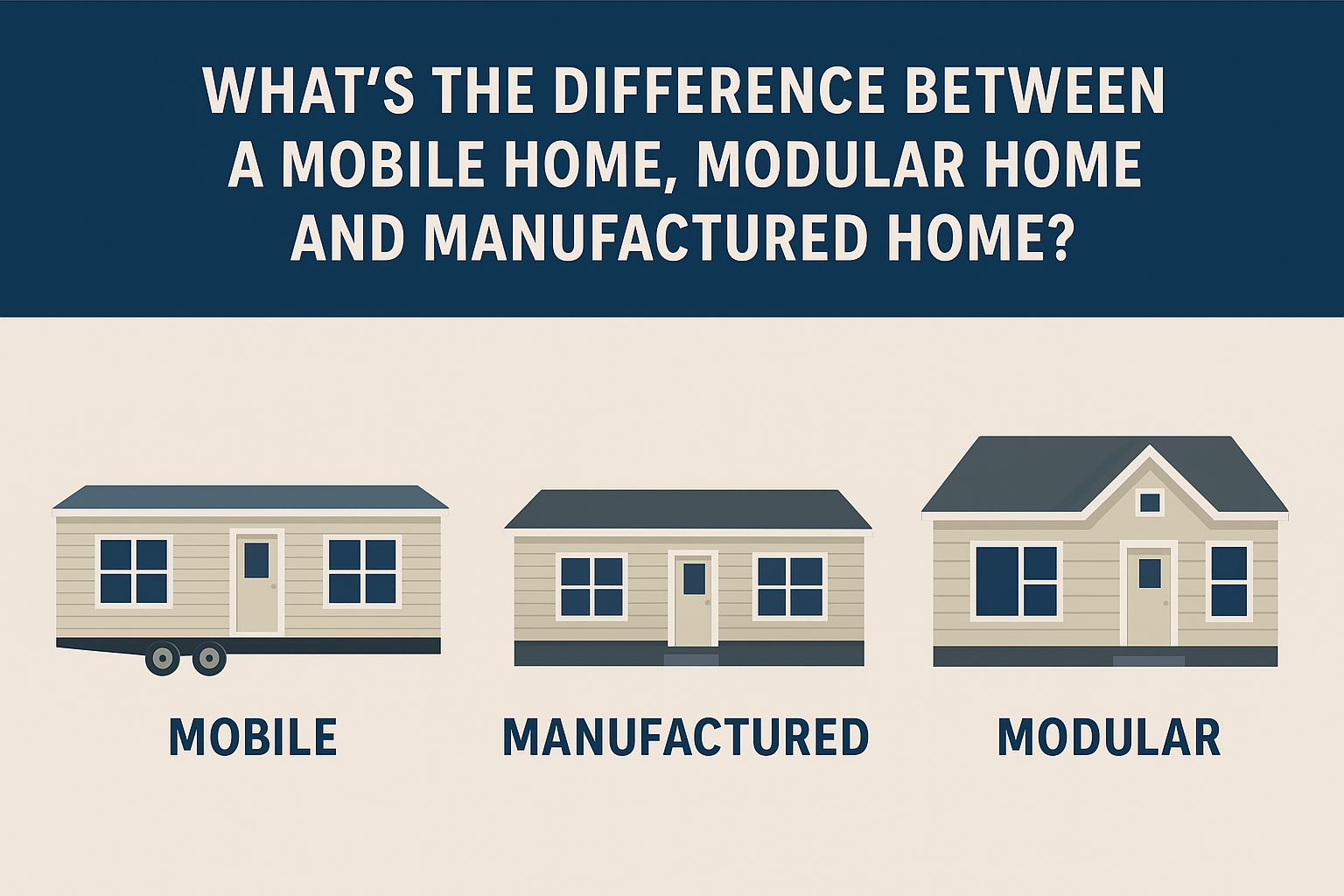
🏠 What’s the Difference Between a Mobile Home, Modular Home, and Manufactured Home?
When searching for affordable housing in San Diego County, you may come across terms like mobile home, manufactured home, and modular home. These housing types can look similar—but there are important differences in how they’re built, regulated, and financed. Understanding these distinctions can help you make a more informed decision when buying or selling.
🚐 Mobile Homes (Built Before 1976)
Definition:
A mobile home refers to a factory-built home constructed before June 15, 1976—the date when federal construction standards took effect under the HUD Code (Housing and Urban Development).
Key Points:
- Built before national safety and construction standards were established.
- Typically built on a steel chassis and transported to a site, often in a mobile home park.
- Can be moved, though doing so is costly and may not meet local zoning rules.
- Financing can be more difficult; some lenders classify them as personal property (not real estate).
In short: All mobile homes are factory-built—but not all factory-built homes are mobile homes.
🏡 Manufactured Homes (Built After 1976)
Definition:
A manufactured home is the modern version of a mobile home, built after June 15, 1976, under strict federal HUD Code regulations. These homes must meet national standards for construction, energy efficiency, fire safety, and structural integrity.
Key Points:
- Built entirely in a factory, then transported to the property site.
- Placed on a permanent or semi-permanent foundation.
- Each section carries a HUD certification label (red tag) verifying compliance with national standards.
- Eligible for financing similar to traditional homes if on owned land with a permanent foundation.
- Available in single-wide, double-wide, or triple-wide layouts.
In short: Manufactured homes are the updated, safer, and better-built successors to mobile homes.
🧱 Modular Homes
Definition:
A modular home is also factory-built, but it follows local and state building codes, not federal HUD standards. It’s built in sections (modules) in a factory and assembled on-site, much like traditional homes.
Key Points:
- Must meet the same local building codes as site-built homes.
- Typically placed on a permanent foundation.
- Can look identical to traditional stick-built homes once completed.
- Usually appreciate in value similar to site-built homes.
- Financing options are the same as for conventional homes.
In short: Modular homes are “real houses” built in a factory and assembled on-site—combining efficiency with traditional quality.
⚖️ Quick Comparison Chart
| Feature | Mobile Home | Manufactured Home | Modular Home |
|---|---|---|---|
| Built Before/After 1976 | Before | After | Ongoing |
| Building Code | None (pre-HUD) | Federal HUD Code | Local/State Codes |
| Foundation | Chassis or semi-permanent | Permanent or semi-permanent | Permanent |
| Financing | Limited (personal property) | Easier (real property eligible) | Traditional mortgage options |
| Appreciation | Usually depreciates | Varies | Often appreciates |
| Movable | Can be moved | Not intended to move | Not movable |
🌴 Final Thoughts
Choosing between a mobile, manufactured, or modular home depends on your lifestyle, budget, and long-term goals. In San Diego County, manufactured and modular homes provide more stability, financing options, and resale potential—while mobile homes remain an affordable entry point for homeownership.
If you’re exploring these housing types or need help determining property value and financing options, I can help guide you through the process from start to finish.
Steve Cardinalli
Real Estate Professional, 01323509
(760) 814-0248
Steve@Cardinalli.com
www.Cardinalli.com
Century 21 Affiliated Fine Homes & Estates
Village Faire in Carlsbad Village
300 Carlsbad Village Dr, 223
Carlsbad, CA 92008
Be the first to know about the market trend in your community at Neighborhood News


