

 Facebook
 X
X
 Pinterest
 Copy Link
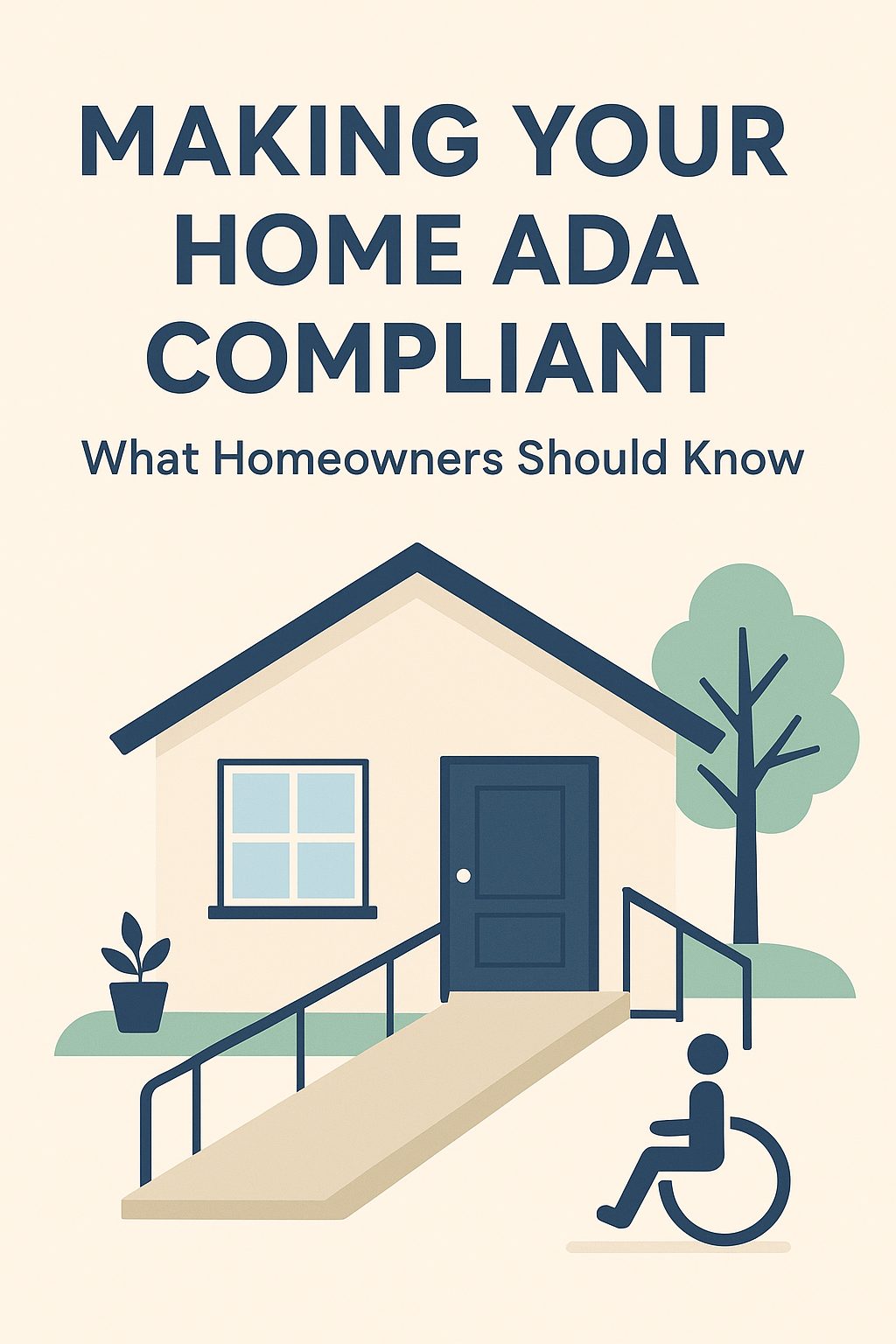
Making Your Home ADA Compliant: What Homeowners Should Know
As accessibility becomes a growing priority for homeowners and future buyers, more people are looking at ways to make their properties ADA-friendly. While the Americans with Disabilities Act (ADA) primarily applies to public and commercial spaces, incorporating ADA-inspired features into a home can significantly improve accessibility, safety, and long-term value—especially for aging residents or those with mobility challenges.
Whether you’re preparing a home for sale or planning ahead for future needs, improving accessibility is an investment in comfort, independence, and overall livability.
What Does ADA-Inspired Housing Mean?
In residential real estate, “ADA-compliant” isn’t legally required in most cases, but ADA standards and universal design principles serve as a helpful blueprint to improve access for:
✅ Seniors aging in place
✅ Individuals with disabilities or mobility limitations
✅ Multi-generational households
✅ Buyers planning for future needs
Homes that are more accessible appeal to a wider buyer pool—an attractive feature in today’s competitive market.
Key Accessibility Improvements
Here are practical ways to make a home more accessible:
Entry & Pathways
- Zero-step entryways
- Ramps or gently sloped walkways
- Widened exterior walkways and doorways (36″ preferred)
Interior Mobility
- Doorways widened to at least 32–36 inches
- Hallways at least 36 inches wide
- Open floor plans with minimal barriers
Bathroom Upgrades
- Walk-in or roll-in showers
- Grab bars near toilets and showers
- Comfort-height toilets
- Non-slip flooring
- Lever-style faucet handles
Kitchen Accessibility
- Counter heights between 28″–34″
- Pull-out cabinet shelves
- Front-control appliances
- Easy-grip cabinet hardware (no tight knobs)
General Living Features
- Lever-style door handles
- Rocker light switches
- Lowering light switches and raising outlets
- Smart-home systems (lighting, security, thermostats)
Garage & Parking
- Extra-wide parking space
- Smooth, step-free entry into the home
Benefits of an ADA-Inspired Home
🏡 Future-proofing for aging in place
👨👩👧 Supports multi-generational living
💰 Increases resale appeal and marketability
🧭 Safer and easier daily living
Accessibility is no longer a specialty feature—it’s becoming a mainstream selling point, particularly in communities with a large senior population.
Simple, Budget-Friendly Upgrades
If full remodels aren’t feasible, small changes still make a big impact:
- Install grab bars and handrails
- Place non-slip mats and flooring
- Replace knobs with lever handles
- Add motion-sensor lighting
- Use smart-home devices and voice-activated systems
These updates offer huge functional value without major renovation costs.
Final Thoughts
Whether you’re planning for your future, improving comfort today, or preparing your home for market, ADA-inspired upgrades create a safer, more accessible, and more desirable space.
Accessible homes support independence, dignity, and comfort—qualities everyone can appreciate.
Steve Cardinalli
Real Estate Professional, 01323509
(760) 814-0248
Steve@Cardinalli.com
www.Cardinalli.com
Century 21 Affiliated Fine Homes & Estates
Village Faire in Carlsbad Village
300 Carlsbad Village Dr, 223
Carlsbad, CA 92008
Be the first to know about the market trend in your community at Neighborhood News


