

 Facebook
 X
X
 Pinterest
 Copy Link
Fee Simple vs. Leasehold: What’s the Difference in Real Estate?
When buying property, most people focus on price, location, and condition—but how you own the property is just as important. Two common ownership types are fee simple and leasehold, and the difference between them can significantly impact value, financing, and long-term flexibility.
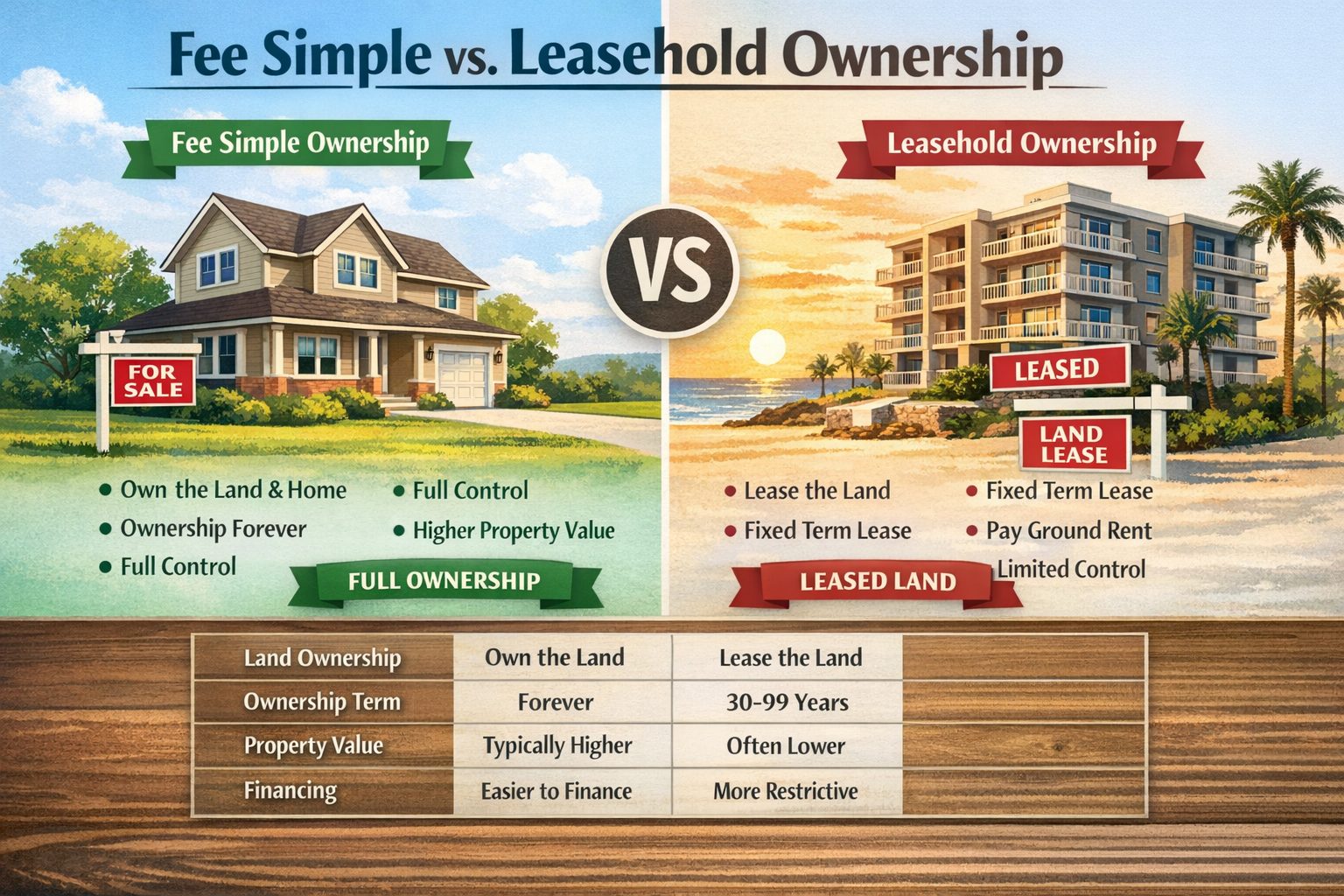
What Is Fee Simple Ownership?
Fee simple is the most complete form of property ownership and the most common in residential real estate.
With fee simple ownership, you own:
- The home or building
- The land beneath it
- The property forever, with no expiration date
Key Features of Fee Simple:
- Full ownership rights
- Ability to sell, rent, remodel, or pass on to heirs
- No time limit on ownership
- Typically easier to finance
- Generally higher market value
Most single-family homes, condos, and townhomes in the U.S. are owned fee simple.
What Is Leasehold Ownership?
With leasehold ownership, you own the structure but not the land it sits on. Instead, you lease the land from a landowner for a fixed period—often 30, 55, 75, or 99 years.
Key Features of Leasehold:
- Ownership expires when the lease ends
- Monthly or annual ground rent
- Restrictions may apply (renovations, rentals, resale)
- Value often declines as lease expiration approaches
- Financing can be more difficult, especially with shorter leases
Leasehold properties are more common in certain coastal areas, resort communities, and parts of Hawaii and California.
How Fee Simple and Leasehold Compare
| Feature | Fee Simple | Leasehold |
|---|---|---|
| Land Ownership | Yes | No |
| Ownership Term | Permanent | Fixed lease term |
| Property Value | Typically higher | Often lower |
| Financing | Easier | More restrictive |
| Control | Full | Limited by lease |
| Resale Appeal | Strong | Depends on lease length |
Which Is Better for Buyers?
There’s no one-size-fits-all answer—it depends on your goals.
Fee simple is usually best for:
- Long-term homeowners
- Investors
- Buyers seeking stability and appreciation
Leasehold may appeal to:
- Buyers looking for a lower purchase price
- Short-term ownership plans
- Specific locations where fee simple options are limited
That said, buyers should always review the remaining lease term, ground rent, and lease restrictions before purchasing a leasehold property.
Why This Matters When Buying or Selling
Ownership type affects:
- Market value
- Buyer pool
- Financing options
- Negotiation strategy
Sellers of leasehold properties often need to price more competitively, while buyers should factor in long-term costs and exit strategy.
Final Thoughts
Understanding the difference between fee simple and leasehold ownership helps buyers make informed decisions and avoid surprises down the road. Before entering escrow, it’s important to review title, lease terms, and financing options with a knowledgeable real estate professional.
If you’re unsure which ownership type applies to a property—or how it impacts value—I’m happy to help clarify your options.
Steve Cardinalli
Real Estate Professional, 01323509
(760) 814-0248
Steve@Cardinalli.com
www.Cardinalli.com
Century 21 Affiliated Fine Homes & Estates
Village Faire in Carlsbad Village
300 Carlsbad Village Dr, 223
Carlsbad, CA 92008
Be the first to know about the market trend in your community at Neighborhood News


