

 Facebook
 X
X
 Pinterest
 Copy Link
How a Ban on Wall Street Investment in Single-Family Homes Could Impact Real Estate
In recent years, large institutional investors—often referred to as “Wall Street”—have become increasingly active in the single-family housing market. These investors typically purchase homes to operate as long-term rentals, particularly in high-growth metro areas. If a future policy were enacted to restrict or ban institutional investment in single-family homes, the real estate market could experience several notable shifts.
Below is an overview of the possible impacts on home prices, buyers, sellers, and renters, should such a policy take effect.
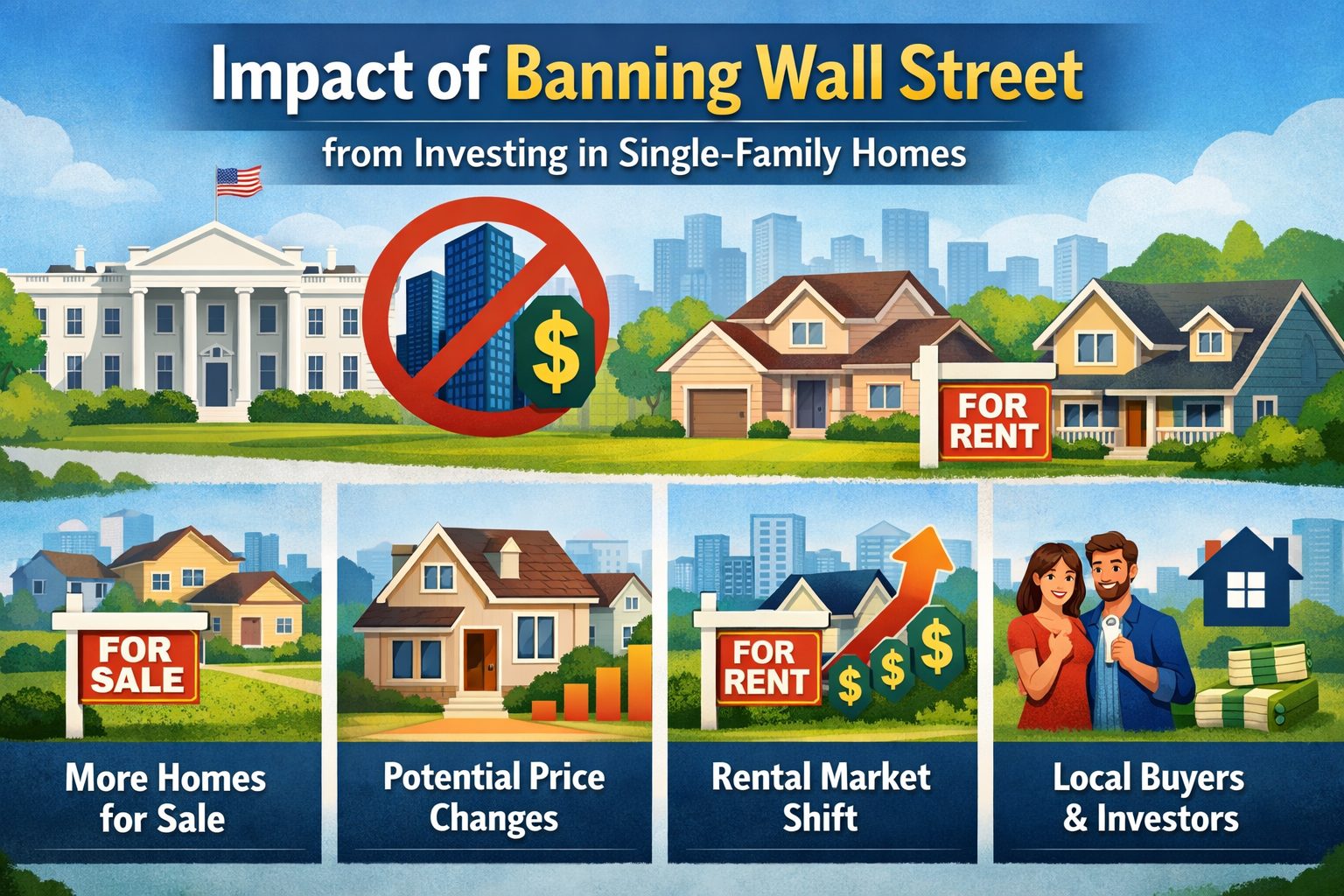
1. Increased Housing Supply for Owner-Occupants
One of the most immediate effects could be a rise in available inventory for traditional homebuyers. Institutional investors often compete directly with families by making all-cash, non-contingent offers. Removing or limiting this buyer pool could:
- Reduce competition in certain price ranges
- Increase the number of homes available to owner-occupants
- Shorten bidding wars in entry-level and mid-priced neighborhoods
This could be especially impactful for first-time buyers who have struggled to compete in recent years.
2. Potential Softening of Home Prices in Some Markets
Investor-heavy markets could see modest price corrections. When demand from large-scale buyers is reduced:
- Price growth may slow
- Some neighborhoods could experience slight value declines
- Appreciation may become more closely tied to local income growth rather than investor demand
However, this impact would likely vary widely by location. Markets with strong population growth and limited new construction may remain resilient.
3. Shifts in the Rental Market
Institutional investors play a significant role in supplying professionally managed single-family rentals. A reduction in this segment could lead to:
- Fewer single-family rental options
- Increased pressure on small, local landlords
- Potential rent increases if rental supply tightens
In areas with high renter demand, this could create unintended affordability challenges for tenants.
4. Opportunities for Local Investors and Small Landlords
A ban targeting large institutional players may open the door for:
- Individual investors
- Small partnerships
- Local real estate owners
These buyers may face less competition for properties, potentially revitalizing local ownership while keeping rental housing in the market.
5. Reduced Market Volatility
Institutional investors tend to scale buying and selling based on market conditions. Limiting their role could:
- Reduce rapid swings in demand
- Create a more stable, locally driven housing market
- Tie home values more closely to fundamentals like employment and wages
This may appeal to long-term homeowners seeking steadier appreciation.
6. Regional Impacts Would Vary Significantly
Not all markets would be affected equally. Areas that could feel the biggest impact include:
- Sun Belt cities with high investor activity
- Suburban neighborhoods dominated by rental portfolios
- Markets with large concentrations of build-to-rent developments
Conversely, markets with limited institutional ownership may see minimal change.
Final Thoughts
A ban on Wall Street investment in single-family homes could reshape parts of the housing market by easing competition for buyers, altering rental dynamics, and shifting ownership back toward individuals and local investors. While the goal of increasing housing affordability may benefit some buyers, the broader effects would depend heavily on local market conditions, housing supply, and renter demand.
As with any major policy change, the real estate market’s response would likely be uneven—creating both opportunities and challenges for buyers, sellers, investors, and renters alike.
Steve Cardinalli
Real Estate Professional, 01323509
(760) 814-0248
Steve@Cardinalli.com
www.Cardinalli.com
Century 21 Affiliated Fine Homes & Estates
Village Faire in Carlsbad Village
300 Carlsbad Village Dr, 223
Carlsbad, CA 92008
Be the first to know about the market trend in your community at Neighborhood News


