

 Facebook
 X
X
 Pinterest
 Copy Link
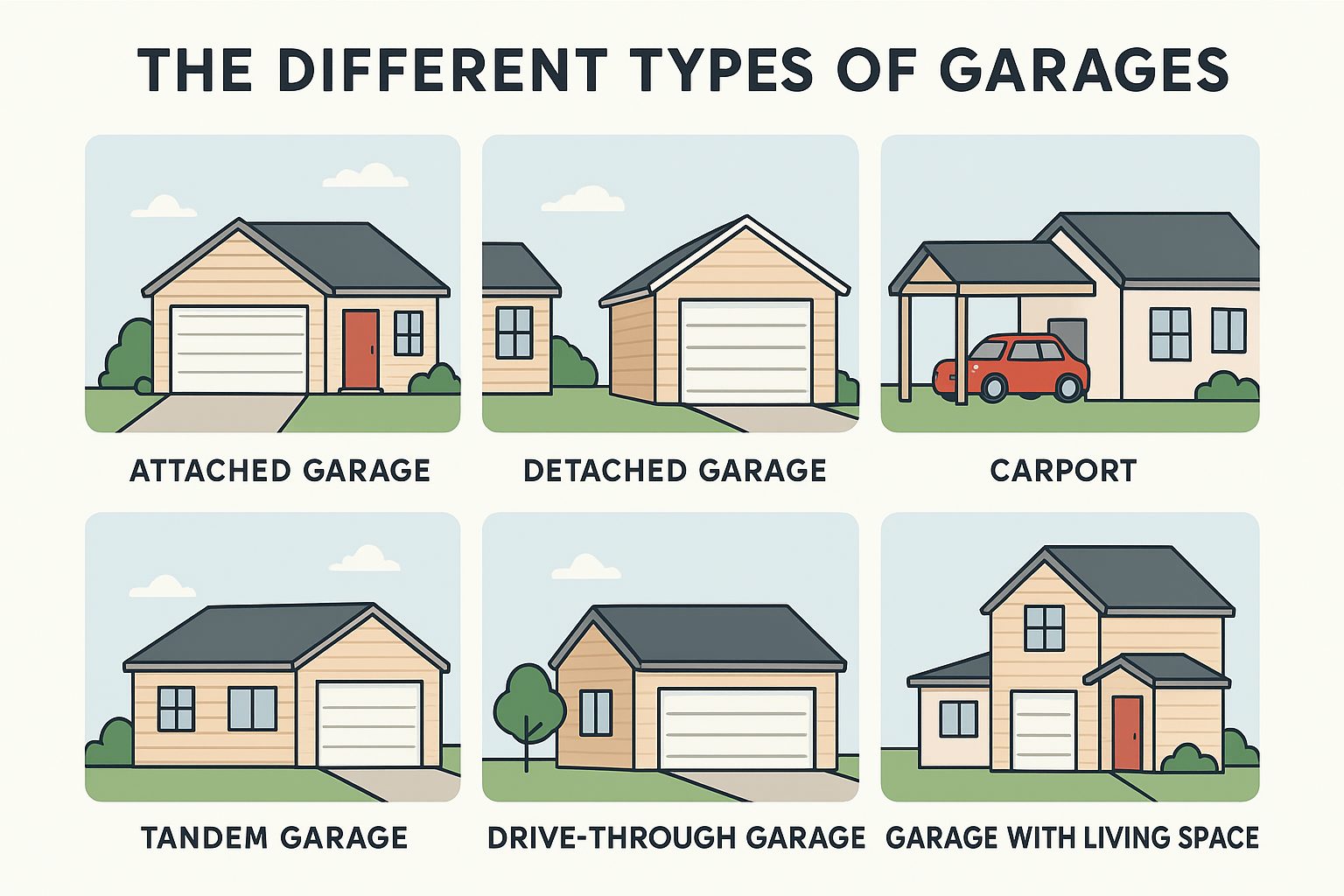
🏠 The Different Types of Garages: Which One Fits Your Home Best?
When buying or selling a home, the garage might not be the first thing you think about — but it’s often a key feature that adds both convenience and value. Garages come in many styles and configurations, each offering unique benefits depending on your needs, lot size, and budget. Here’s a breakdown of the most common types of garages you’ll encounter in real estate.
1. Attached Garage
An attached garage is built directly into the home and shares one or more walls with the main structure. This is the most common style in suburban neighborhoods.
Pros:
- Convenient access to the home, especially in bad weather.
- Easier to heat or cool since it’s part of the main structure.
- Typically more affordable to build than a detached garage.
Cons:
- May transmit noise or fumes into the house.
- Can limit expansion options or home design flexibility.
Best for: Homeowners who value convenience and accessibility.
2. Detached Garage
A detached garage stands separate from the home, often connected by a walkway or breezeway.
Pros:
- Greater design flexibility and curb appeal.
- Ideal for workshops, hobby spaces, or home gyms.
- Less noise and fumes in the living space.
Cons:
- Less convenient in bad weather.
- Typically more expensive to build due to additional foundation and utilities.
Best for: Buyers who want a separate workspace or prioritize aesthetics.
3. Carport
A carport is a covered parking area with open sides, offering protection from the sun and rain without the cost of a full enclosure.
Pros:
- Budget-friendly and quick to build.
- Provides basic protection for vehicles.
- Can be added to homes with limited space or strict zoning.
Cons:
- Offers limited security and protection.
- May not add as much resale value as a full garage.
Best for: Homeowners in mild climates or those looking for an affordable parking solution.
4. Tandem Garage
A tandem garage is designed to fit two or more vehicles end-to-end rather than side-by-side.
Pros:
- Efficient use of narrow lots.
- Provides extra storage or workspace.
Cons:
- Inconvenient for daily use — the first car must be moved to access the second.
- Not ideal for multiple drivers with conflicting schedules.
Best for: Narrow lots or homeowners who use one vehicle regularly and the other for storage or seasonal use.
5. Drive-Through Garage
A drive-through garage has doors on both ends, allowing vehicles to enter and exit from different sides — great for properties with dual street access.
Pros:
- Excellent for boat or trailer storage.
- Easy maneuverability — no backing out required!
Cons:
- Requires more land and additional doors (higher cost).
Best for: Homes on large lots or those with rear street or alley access.
6. Garage with Living Space (Accessory Dwelling Unit or Bonus Room)
Some garages include a living space above or beside — often a guest suite, home office, or ADU (Accessory Dwelling Unit).
Pros:
- Adds living space and rental potential.
- Can significantly increase property value.
Cons:
- More expensive to build and maintain.
- May require special permits or zoning approval.
Best for: Homeowners looking to maximize property utility or generate income.
Final Thoughts
The right type of garage depends on your lifestyle, property layout, and long-term goals. Whether it’s a simple carport or a fully equipped garage with a loft, this feature can greatly influence your home’s functionality — and its appeal to buyers.
If you’re considering adding or remodeling a garage, consult with your local real estate professional and check city zoning regulations to ensure your investment adds value where it counts most.
Steve Cardinalli
Real Estate Professional, 01323509
(760) 814-0248
Steve@Cardinalli.com
www.Cardinalli.com
Century 21 Affiliated Fine Homes & Estates
Village Faire in Carlsbad Village
300 Carlsbad Village Dr, 223
Carlsbad, CA 92008
Be the first to know about the market trend in your community at Neighborhood News


