

 Facebook
 X
X
 Pinterest
 Copy Link
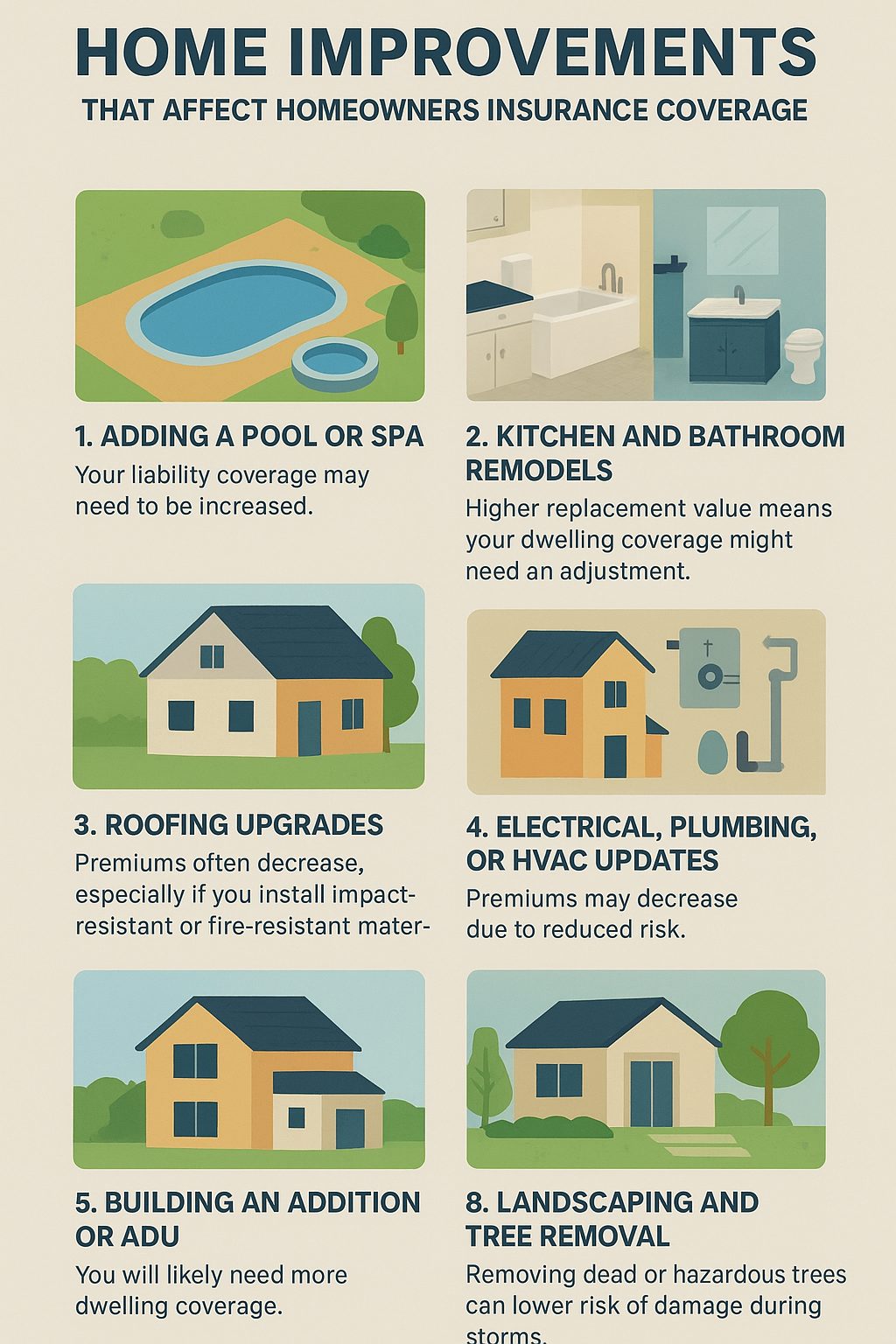
Home Improvements That Affect Homeowners Insurance Coverage
When homeowners plan improvements, they usually think about boosting comfort, increasing home value, or modernizing outdated spaces. But one area that often gets overlooked is homeowners insurance. Certain upgrades can lower your premiums, while others may raise them—and in some cases, failing to notify your insurer can even leave you underinsured.
Understanding how home improvements affect your coverage is essential, especially in today’s market where replacement costs and risk factors are continually shifting. Here’s a breakdown of the most common upgrades that impact homeowners insurance and what every homeowner should keep in mind.
1. Adding a Pool or Spa
A backyard pool or spa can make your home feel like a private resort, but it also increases liability risk.
Insurance impact:
- Your liability coverage may need to be increased.
- You may be required to install safety features like fencing or self-latching gates.
- Premiums usually go up due to higher risk.
Tip: Before breaking ground, confirm what your insurer requires to stay fully covered.
2. Kitchen and Bathroom Remodels
These upgrades add significant value and often increase the cost to rebuild your home.
Insurance impact:
- Higher replacement value means your dwelling coverage might need an adjustment.
- Premiums may increase slightly due to increased rebuild costs.
Tip: Keep receipts and detailed records of your renovation costs.
3. Roofing Upgrades
A new roof isn’t just a great selling point—it’s also one of the best improvements for insurance savings.
Insurance impact:
- Premiums often decrease, especially if you install impact-resistant or fire-resistant materials.
- Some insurers offer credits for certain roof styles or materials.
Tip: Ask your contractor for documentation on materials and wind/fire ratings.
4. Electrical, Plumbing, or HVAC Updates
Older systems pose fire and water-damage risks. Updating them can dramatically improve safety.
Insurance impact:
- Premiums may decrease due to reduced risk.
- Insurers may require updates in older homes to maintain coverage.
Tip: Save proof of system upgrades—this can result in insurance discounts.
5. Building an Addition or ADU
An addition increases the size and replacement cost of your home. ADUs (Accessory Dwelling Units) also introduce new liability factors, especially if rented out.
Insurance impact:
- You will likely need more dwelling coverage.
- Rental uses may require additional liability or landlord coverage.
Tip: Always notify your insurer before renting out the space.
6. Installing Smart Home Security Systems
Security upgrades are a win for both safety and insurance savings.
Insurance impact:
- Premiums often decrease when you install monitored alarm systems, smart cameras, water leak detectors, or fire alarms.
- Many insurers offer tiered discounts based on the level of monitoring.
Tip: Provide your insurer with proof of active monitoring.
7. Upgrading Windows or Adding Storm Shutters
Particularly in areas prone to windstorms or wildfires, more resilient windows reduce risk.
Insurance impact:
- Potential premium discounts.
- Some insurers require certain window strengths in high-risk zones.
Tip: Ask your insurer if the upgrade qualifies for hazard-mitigation credits.
8. Landscaping and Tree Removal
Believe it or not, your yard can influence your insurance.
Insurance impact:
- Removing dead or hazardous trees can lower risk of damage during storms.
- Adding features like retaining walls or extensive hardscaping may raise replacement costs.
Tip: Document tree removal or defensible-space improvements for wildfire-prone areas.
Why It’s Important to Notify Your Insurance Company
Any major home improvement that increases value, risk, or structural components can affect whether you have adequate coverage. If you fail to update your policy:
- You may be underinsured in a total-loss event.
- Claims can be denied for unreported features (e.g., a pool or rental unit).
- You could miss out on discounts that save you money.
A quick call to your insurance agent before and after improvements ensures your coverage stays accurate and your investment is protected.
Final Thoughts
Home improvements are an exciting way to build equity and enhance comfort—but they also reshape your insurance profile. Whether you’re adding safety features or expanding your living space, staying proactive with your insurer helps avoid surprises and ensures your home is fully protected.
Steve Cardinalli
Real Estate Professional, 01323509
(760) 814-0248
Steve@Cardinalli.com
www.Cardinalli.com
Century 21 Affiliated Fine Homes & Estates
Village Faire in Carlsbad Village
300 Carlsbad Village Dr, 223
Carlsbad, CA 92008
Be the first to know about the market trend in your community at Neighborhood News


