

 Facebook
 X
X
 Pinterest
 Copy Link
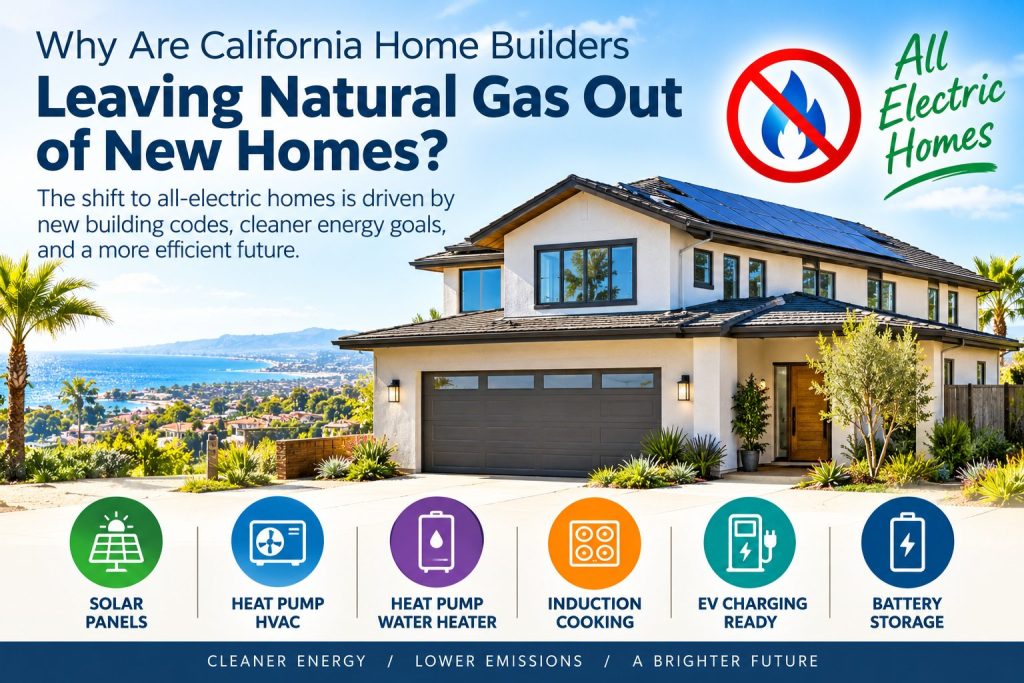
Why Are California Home Builders Leaving Natural Gas Out of New Homes?
The shift toward all-electric homes is changing what buyers can expect from new construction
If you have toured a newly built home in California recently, you may have noticed something different: there may be no natural-gas appliances or gas service at all.
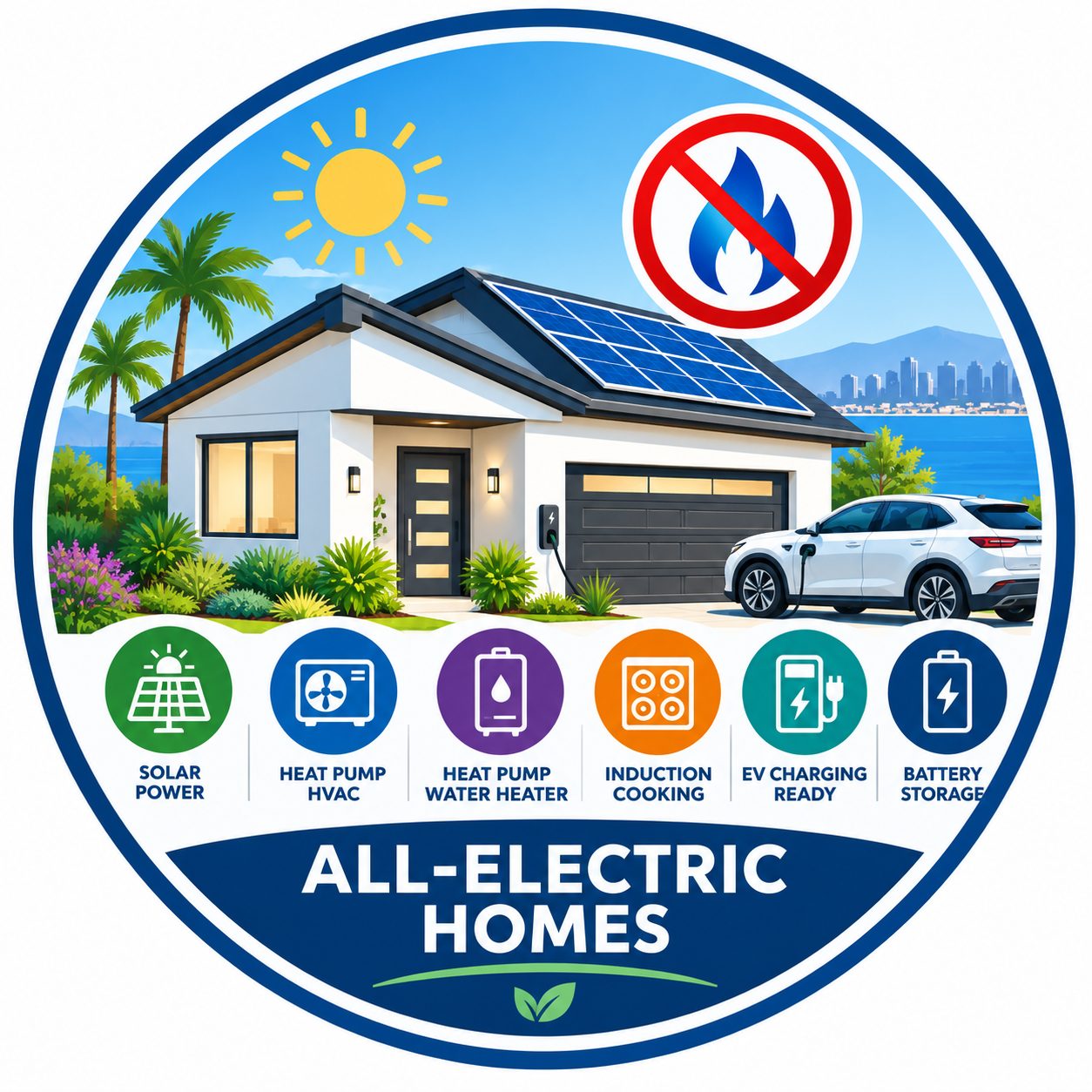
Instead, today’s new homes are increasingly being designed around electricity—with heat-pump heating and air conditioning, electric water heaters, induction or electric cooking, and electrical systems designed to support future technologies such as electric vehicles and battery storage.
So why is this happening?
The answer involves a combination of California’s building-energy standards, environmental policy, energy efficiency, construction economics and the changing technology available to builders.
California’s Building Codes Are Moving Toward Electrification
One of the biggest reasons is California’s evolving Energy Code.
The state’s 2025 Building Energy Efficiency Standards took effect January 1, 2026 and apply to buildings with permit applications submitted on or after that date. The updated code expands the use of heat pumps in newly constructed residential buildings and encourages greater electrical readiness.
California’s Energy Commission specifically identifies heat pumps for space heating and water heating as an important part of the state’s approach to new-home construction.
Importantly, this does not mean that every new California home is legally prohibited from having natural gas. The rules provide pathways for certain gas appliances, while requiring electrical infrastructure that can support future electrification.
For builders, however, designing a home to be completely electric can often be a simpler approach to meeting today’s energy requirements.
Why Use a Heat Pump Instead of a Gas Furnace?
A traditional home might use natural gas for the furnace and water heater while electricity powers the lights, appliances and air conditioning.
An all-electric home takes a different approach.
A heat pump can move heat rather than creating heat through combustion. In the winter, it can extract heat from outdoor air and move it inside. In the summer, it can reverse the process and operate as an air conditioner.
That means one system can provide both heating and cooling.
California’s updated Energy Code expands the use of heat-pump technology because of its potential energy-efficiency and emissions benefits.
What About Water Heaters?
The same transition is occurring with water heating.
Instead of a traditional gas water heater, many new homes now use heat-pump water heaters.
These systems use electricity to move heat into the water rather than burning natural gas.
For a builder constructing hundreds of homes in a new development, standardizing the same electrical-based equipment throughout the project can also simplify design, installation and long-term maintenance.
Builders Also Have to Think About the Future
A new home built today could still be standing 50, 75 or even 100 years from now.
Builders therefore have to consider not only today’s requirements but also the direction in which California’s energy system is moving.
California has been pursuing building electrification as part of its broader effort to reduce greenhouse-gas emissions. The state also provides resources focused on electrifying water heating, space conditioning, cooking and electric-vehicle charging.
The California Public Utilities Commission is also working on policies concerning the future of the state’s natural-gas system and building decarbonization.
For developers, installing a gas infrastructure system that may have a smaller role in the future can be less attractive than designing a community around electricity from the beginning.
Solar Panels Make Electricity Even More Attractive
California’s new-home energy strategy also works well with solar power.
A home equipped with solar panels can generate some of its own electricity. Add a battery-storage system and the homeowner can potentially store excess energy for use later.
That creates an energy ecosystem in which:
Solar panels → electricity → heat pump → hot water and home heating/cooling
rather than:
Natural gas → furnace/water heater → combustion
The all-electric approach also fits naturally with electric vehicles, which are becoming increasingly common in California.
What About Cooking?
This is one area where buyers can have strong personal preferences.
Some homeowners love cooking with natural gas because of the immediate flame and familiar cooking experience.
Others prefer induction cooking, which uses electromagnetic energy to heat compatible cookware.
Induction cooktops can provide precise temperature control while keeping the cooking surface relatively cool compared with traditional electric or gas cooking.
For buyers accustomed to gas ranges, however, an all-electric kitchen can be an adjustment.
Does This Mean Existing Gas Homes Are Going Away?
No.
This distinction is important.
California’s movement toward electrification primarily affects new construction and new equipment requirements. It does not mean that a homeowner with an existing natural-gas furnace or stove automatically has to remove it simply because the home is older.
The California Energy Commission’s electric-ready rules specifically address newly constructed homes and provide requirements for electrical infrastructure when certain gas appliances are used.
In other words, buying an older California home with natural gas is very different from purchasing a newly constructed home designed as all-electric.
Could All-Electric Homes Affect Property Values?
This is where the issue becomes particularly interesting for real estate.
At this point, it would be premature to say that an all-electric home automatically has a higher or lower market value than a comparable home with natural gas.
Buyers have different preferences.
Some may consider all-electric construction a major benefit because they like the idea of solar power, heat pumps, EV charging and lower reliance on fossil fuels.
Other buyers may prefer natural gas for cooking or simply because that is what they are accustomed to.
Over time, however, the availability of electrical infrastructure could become an increasingly important characteristic of a property.
A home with:
– Solar panels
– Battery storage
– EV charging
– A high-capacity electrical panel
– Heat-pump HVAC
– A heat-pump water heater
– Energy-efficient construction
may be viewed differently by buyers than an older property requiring substantial electrical upgrades to accommodate modern equipment.
What Should Buyers Ask When Purchasing a New Home?
When purchasing new construction, buyers should look beyond the finishes and floor plan.
Ask the builder:
Is the home all-electric?
Is natural-gas service available?
What type of HVAC system is installed?
Is the water heater a heat-pump model?
Is the home equipped with solar?
Is battery storage included or optional?
What size electrical panel is installed?
Is an EV charger included, or is the home only EV-ready?
Are there additional costs for upgrading electrical capacity or appliances?
These questions can help buyers understand not only how the home operates today, but how well it is prepared for future energy needs.
The Bottom Line
California’s new-home market is increasingly moving toward electrification, and the trend is being driven by more than one factor.
Updated building-energy standards, heat-pump technology, solar power, EV adoption, energy-efficiency goals and California’s broader building-decarbonization policies are all contributing to the change.
For today’s homebuyer, an all-electric home isn’t simply a house without a gas line. It represents a different approach to how a home is heated, cooled, powered and equipped for the future.
For California real estate professionals, this means understanding electrification is becoming another important part of explaining new construction, home features and long-term property value to buyers and sellers.
The California home of the future may not need a gas line at all—it may simply need a well-designed electrical system.
Steve Cardinalli
Real Estate Professional, 01323509
(760) 814-0248
Steve@Cardinalli.com
www.Cardinalli.com
Century 21 Affiliated Fine Homes & Estates
Village Faire in Carlsbad Village
300 Carlsbad Village Dr, 223
Carlsbad, CA 92008
Be the first to know about the market trend in your community at Neighborhood News


