BuyerFirst Time Buyer September 30, 2025

Getting ready to buy a home starts long before you fill out a loan application 🏡💡.

Small actions—like monitoring your credit, setting aside extra savings, and keeping big purchases on pause—can make a big difference when it’s time to apply.

I’m here to guide you through each step so you feel confident and prepared.

Have questions about where to begin? Send me a message and let’s build your game plan today! 📲

Be the first to know about the market trend in your community at Neighborhood News


Government September 30, 2025

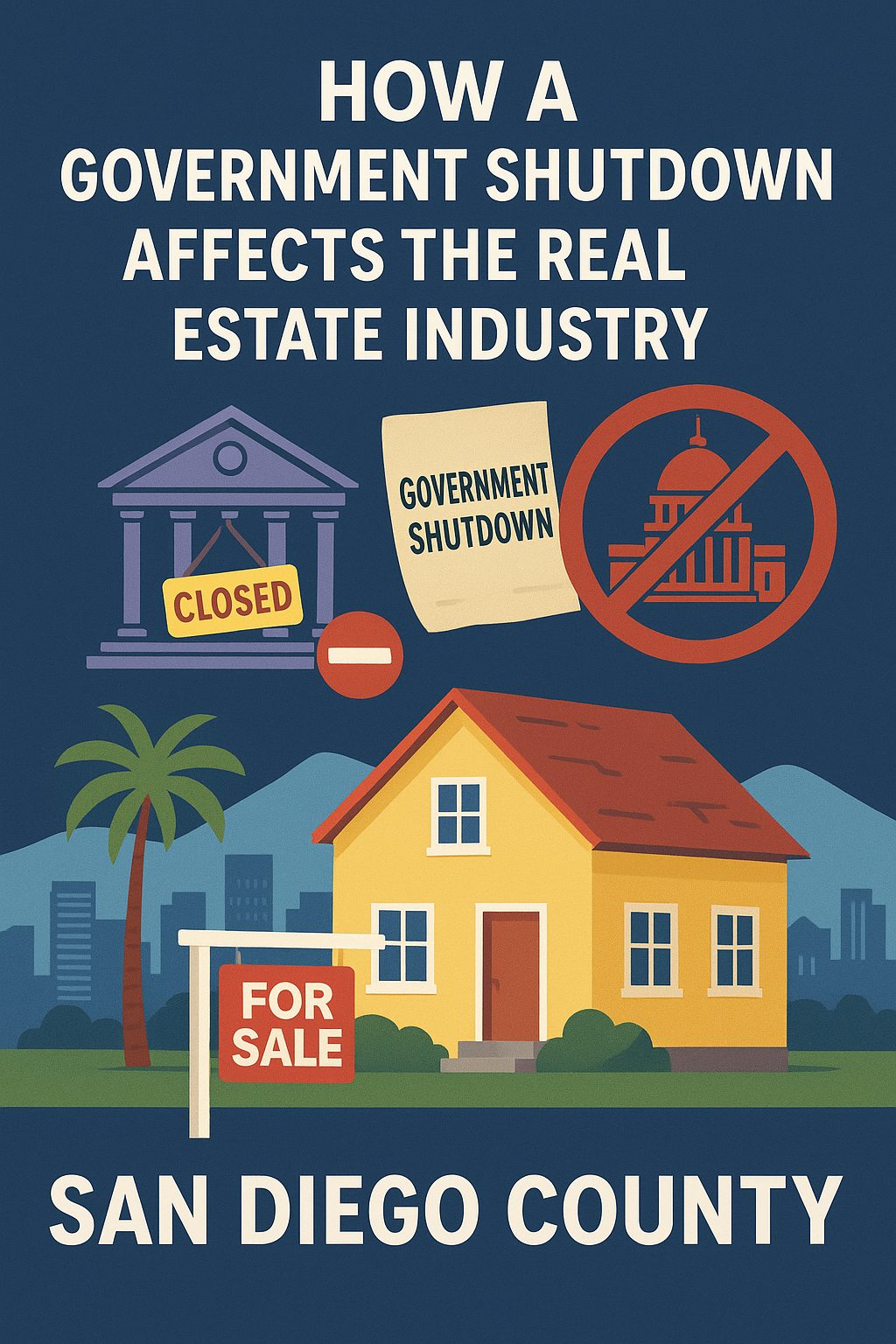
What Happens to Real Estate when the Government Shuts Down

When the federal government shuts down, most people immediately think of national parks closing, delayed tax refunds, or furloughed workers. But the effects stretch far beyond those headlines. One industry that often feels the ripple effects is real estate. From mortgage approvals to consumer confidence, a government shutdown can slow the pace of transactions and make the market less predictable.

1. Mortgage Processing Delays
Many loan approvals require verification through federal agencies. For example, the IRS provides income verification for borrowers, and the Social Security Administration confirms social security numbers. If these offices are closed or operating with limited staff, lenders can’t always finalize loans. This leads to delays in closings, frustrated buyers and sellers, and in some cases, canceled deals.

2. FHA and VA Loans at Risk
Government-backed loan programs like FHA and VA loans are especially vulnerable. During a shutdown, these programs may stop issuing new guarantees or slow to a crawl, impacting first-time homebuyers and veterans who often rely on these affordable financing options.

3. Appraisal and Inspection Bottlenecks
Some appraisals and inspections rely on federal resources, such as access to flood maps maintained by FEMA. If updates or services are delayed, it can hold up the underwriting process and stall transactions.

4. Market Uncertainty and Consumer Confidence
Uncertainty is one of the biggest impacts. A shutdown often creates anxiety about the economy, which can make potential buyers hesitant to commit. Homeowners may delay putting their homes on the market, and investors may step back until the government is fully operational again.

5. Local Economic Impact
In regions with a large number of federal employees, furloughs can affect household incomes. This can reduce local housing demand in the short term, especially if the shutdown drags on and families are forced to reprioritize their spending.

The Bottom Line
A government shutdown may not bring real estate to a halt, but it does introduce delays, uncertainty, and frustration. Buyers, sellers, and agents alike should be prepared for possible slowdowns in loan approvals, added stress in transactions, and a more cautious market. While the long-term fundamentals of real estate typically remain strong, the short-term turbulence caused by a shutdown is something the industry cannot ignore.


Steve Cardinalli
Real Estate Professional, 01323509
(760) 814-0248
Steve@Cardinalli.com
www.Cardinalli.com
Century 21 Affiliated Fine Homes & Estates
Village Faire in Carlsbad Village
300 Carlsbad Village Dr, 223
Carlsbad, CA 92008


Be the first to know about the market trend in your community at Neighborhood News


Insurance September 26, 2025

What’s Changed: Why Insurers Are Coming Back

InsuranceInsurancecape has been under pressure for years. Rising wildfire risk, regulatory constraints, skyrocketing reinsurance costs, and frequent cancellations have made coverage difficult to obtain or afford. But recent regulatory changes and insurer commitments suggest many carriers are returning, or increasing their presence, in the state. (California Department of Insurance)

Here’s how that return could positively impact the real estate market — and why it matters for homeowners, buyers, developers, and the state at large.


What’s Changed: Why Insurers Are Coming Back

To understand the positive impacts, it helps to know what’s shifting:

  • Regulatory reforms: California’s Department of Insurance under Commissioner Lara has pushed the Sustainable Insurance Strategy, which includes allowing catastrophe / wildfire risk modeling in rate setting and encouraging insurers to write more policies in wildfire-prone or “higher-risk” areas. (California Department of Insurance)
  • Mandates for coverage in distressed zones: Under the new rules, insurance companies are required to write more policies for homes in wildfire-distressed zones — something that was not required before. (California Department of Insurance)
  • Fairer recognition of mitigation efforts: Wildfire catastrophe models are now expected to reflect mitigation — such as defensible space, fire-resistant building materials, community mitigation projects — which should help homeowners who invest in safety to see lower premiums. (California Department of Insurance)
  • Carrier commitments: Some insurers (e.g. Mercury Insurance, Allstate, CSAA among others) have made filings or public commitments to expand coverage. (California Department of Insurance)

How Return of Insurers Helps the Real Estate Market

Assuming insurers keep returning and reforms continue, here are likely positive effects on real estate:

  1. Increased buyer confidence and broader market access
    One of the biggest obstacles in recent years has been that buyers either can’t find insurance or find that premiums or coverage are so onerous that purchasing a home becomes financially risky. When insurers are available again, especially in higher-risk zones, potential buyers don’t have to worry about insurance being a barrier — or a deal-breaker.
  2. More stable insurance costs
    With better risk modeling and recognition of mitigation, rates can become more predictable. Sudden spikes or non-renewals (which have been common) become less likely. Predictability helps both homeowners and investors plan and assess costs better, which strengthens the real estate investment case.
  3. Reduced reliance on FAIR Plan or high-cost “last resort” coverage
    The California FAIR Plan (a plan of last resort when private carriers won’t insure in certain areas) has ballooned, especially in high-risk ZIP codes. But FAIR Plan policies are generally more expensive, and provide more limited coverage. Reduced use of FAIR Plan means properties can get full homeowners’ policies, which are more attractive to buyers, lenders, and investors. (Wikipedia)
  4. Improved financing and investment flows
    Mortgage lenders require proof of adequate insurance. If insurance is unavailable or too expensive, loans may get denied or the buyer may have trouble qualifying. With more insurers, better options, and more reasonable premiums, financing becomes easier, more deals close, and real estate transactions are less likely to stall.
  5. Increased property values in high-risk but formerly under-insured areas
    Homes in wildfire-prone zones or formerly risk-averse areas have seen depressed demand because insurance was such a headache. As insurers return and coverage improves, these areas may see renewed interest, which could boost property values — though with risk, and probably with premium caveats.
  6. Encouragement of better building practices and risk mitigation
    Knowing that mitigation efforts will be rewarded (through lower premiums or eligibility for coverage) can motivate builders, developers, local governments, and homeowners to invest in resilient design, fire-resistant materials, defensible space, etc. Over time, that can reduce overall risk, costs, and losses.
  7. Healthier market for real estate agents, developers, and builders
    With fewer insurance barriers, fewer canceled policies, fewer surprises, the ecosystem around real estate (realtors, developers, builders) becomes more stable. More predictable insurance helps developers plan new builds (especially in higher-risk zones) and could unlock more construction, easing supply constraints.

Potential Challenges and What to Watch

While the return of insurers is promising, there are caveats. These are issues that could dampen or complicate the positive effects:

  • Premium still high in extreme-risk areas: Even with reforms, zones with very high wildfire risk may continue to see elevated premiums, high deductibles, or limited coverage. Not all risk can be mitigated, so costs will still be a factor.
  • Insurance “affordability” vs “availability”: Having insurers willing to write policies is part of the solution — but if premiums remain unaffordable for many, the benefit is limited.
  • Regulatory friction and legal challenges: There are criticisms of some of the new rules (for instance from advocacy groups) about how rates are reviewed, how much power intervenors have, etc. (CalMatters)
  • Climate risk continues to rise: Wildfires, drought, extreme weather are ongoing. If losses escalate much more, the risk burden could again push insurers to exit or raise more rates.
  • Lag time: Reforms and insurer returns won’t instantly “fix” the market. It takes time for underwriting changes, rate approvals, filings, compliance, etc. For many homeowners, the stress and backlog of denied renewals/policies still looms.

Key Metrics to Follow & Indicators of Success

To assess whether things are really improving for real estate because of insurers returning, watch these:

  • Changes in insurance premiums and renewal rates in wildfire-prone ZIP codes
  • Number of homeowners who move off FAIR Plan to standard private insurance
  • Number of insurers writing in high-risk areas (and what portion of their book of business that is)
  • Property sales volumes in areas that were previously under-insured or unattractive due to insurance issues
  • Lending activity — e.g. mortgage approval rates vs declined due to insurance unavailability
  • New construction starts in “at-risk” or formerly avoided zones

Bottom Line

The return of insurance companies to California could be a game-changer for the state’s real estate market—opening up previously-risky areas, restoring buyer confidence, improving affordability (or at least reducing some of the hidden costs), and enabling more financing.

But full benefit depends on how well reforms hold up, how much premiums drop or stabilize, how much actual coverage in previously underserved areas increases, and how well mitigation measures are adopted.

For real estate stakeholders—homebuyers, sellers, developers, investors—this is something to watch closely. Better insurance can unlock value, but only if the risk is addressed and affordability followed.


Steve Cardinalli
Real Estate Professional, 01323509
(760) 814-0248
Steve@Cardinalli.com
www.Cardinalli.com
Century 21 Affiliated Fine Homes & Estates
Village Faire in Carlsbad Village
300 Carlsbad Village Dr, 223
Carlsbad, CA 92008


Be the first to know about the market trend in your community at Neighborhood News
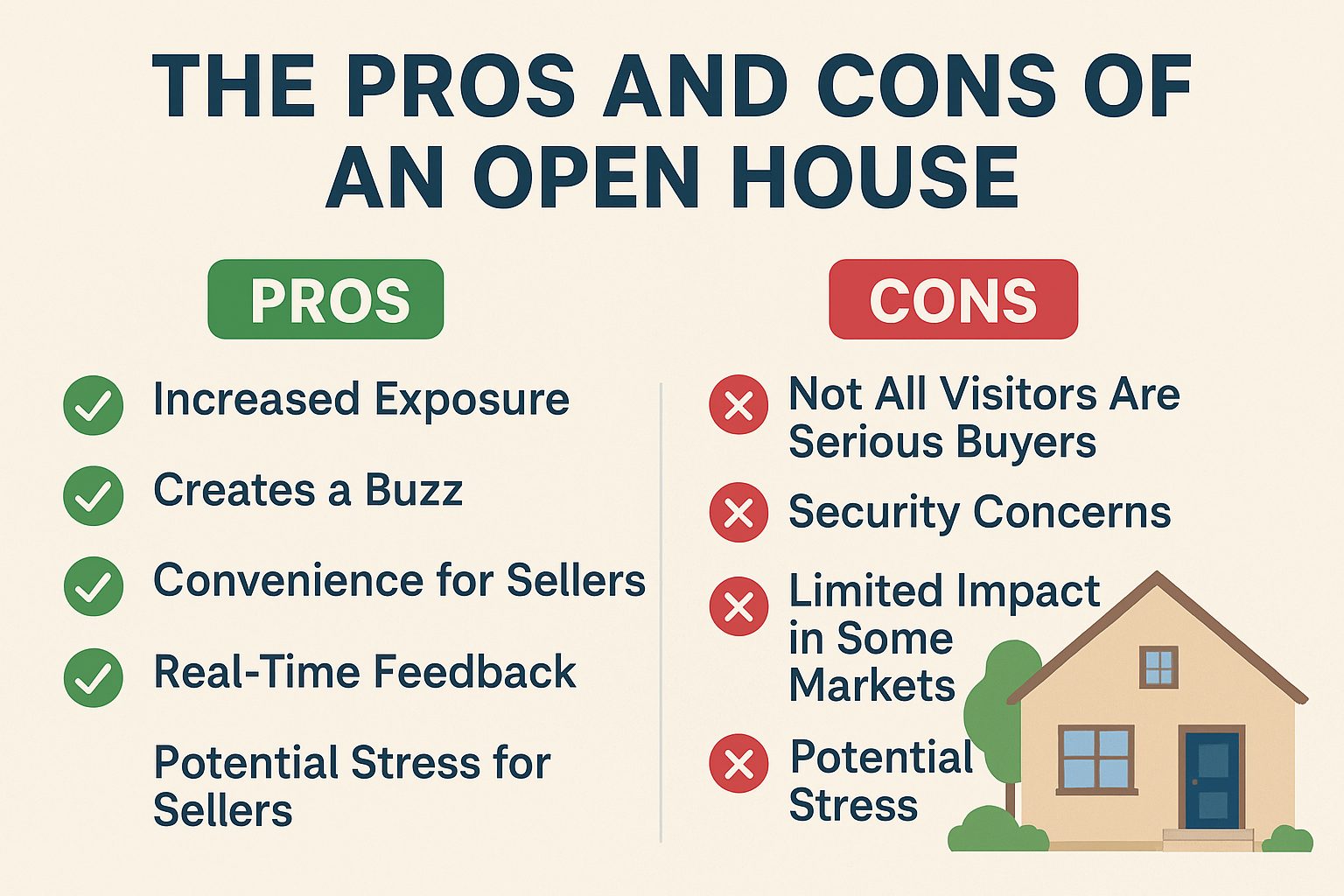

ClimateGlobal Warming September 23, 2025

How Global Warming Is Reshaping the Real Estate Market

How Global Warming Is Reshaping the Real Estate Market

Global warming is no longer a distant concern—it’s a present-day force influencing communities, economies, and industries worldwide. One of the most affected sectors is real estate, where climate-driven changes are beginning to reshape property values, insurance costs, and investment strategies.

Rising Sea Levels and Coastal Properties

Coastal communities face the most immediate risk from rising sea levels. Homes once prized for their waterfront views are increasingly vulnerable to flooding and erosion. In some markets, buyers are becoming hesitant to invest in oceanfront or bayfront properties without strong mitigation measures, leading to declining values in at-risk areas.

Increased Insurance Costs

As extreme weather events become more frequent—wildfires, hurricanes, floods, and heatwaves—insurance companies are adjusting rates to reflect the growing risk. In some high-risk zones, coverage is either extremely expensive or no longer available. This directly impacts affordability and can limit a property’s resale potential.

Shifts in Buyer Demand

Climate risk is changing where people want to live. For example, in the U.S., migration patterns show some buyers moving away from fire-prone California regions or hurricane-prone coastal states toward areas perceived as “climate-safe.” This shift influences demand and can significantly alter regional markets over time.

Energy Efficiency and Green Building

On the positive side, global warming is pushing sustainability to the forefront. Buyers increasingly value homes with solar panels, efficient insulation, smart thermostats, and other eco-friendly features that reduce carbon footprints and lower utility bills. Properties with green certifications often command higher prices and sell faster.

Urban Planning and Zoning Changes

Cities and counties are responding to climate change with updated building codes and zoning laws. In some areas, new developments require elevated foundations, fire-resistant materials, or water-conservation systems. While these changes increase construction costs, they also enhance long-term property resilience and marketability.

The Long-Term Investment Outlook

For investors and homeowners alike, factoring climate change into real estate decisions is no longer optional. Properties in vulnerable areas may face depreciation, while those in resilient or climate-favored regions could see rising demand. Forward-looking buyers and investors should weigh not just today’s property value, but also the environmental risks of tomorrow.


Bottom line: Global warming is transforming the real estate landscape. From coastal erosion to wildfire risk, from rising insurance costs to eco-friendly upgrades, climate change is now a core factor in buying, selling, and investing decisions.


Steve Cardinalli
Real Estate Professional, 01323509
(760) 814-0248
Steve@Cardinalli.com
www.Cardinalli.com
Century 21 Affiliated Fine Homes & Estates
Village Faire in Carlsbad Village
300 Carlsbad Village Dr, 223
Carlsbad, CA 92008


Be the first to know about the market trend in your community at Neighborhood News

AffordabilityBuyerFirst Time Buyer September 22, 2025

Wondering How Much House You Can Afford?

Before you start touring homes, it’s important to know what price range is right for you 💡.

Your income, monthly debts, and savings all play a big role in determining how much house you can comfortably afford.

Once you have that number, we can focus on homes that truly fit your budget and wish list.

Let’s team up to find your perfect match—starting with your budget!


Steve Cardinalli
Real Estate Professional, 01323509
(760) 814-0248
Steve@Cardinalli.com
www.Cardinalli.com
Century 21 Affiliated Fine Homes & Estates
Village Faire in Carlsbad Village
300 Carlsbad Village Dr, 223
Carlsbad, CA 92008


Be the first to know about the market trend in your community at Neighborhood News


Sports September 22, 2025

How the NFL Impacts Real Estate Markets

When most people think about the NFL, they picture game-day excitement, packed stadiums, and passionate fans. What often goes unnoticed is the way professional football influences local real estate markets. From boosting property values to shaping neighborhood dynamics, the NFL’s presence in a city can have a surprisingly big impact.


Stadium Developments and Neighborhood Transformation

When a new stadium is built or an existing one renovated, it often triggers a wave of development in the surrounding area. Restaurants, hotels, retail centers, and housing projects frequently follow. This type of growth can increase property values nearby, sometimes significantly. However, it can also lead to higher costs of living and concerns about gentrification.


Short-Term Rentals and Tourism

NFL games draw tens of thousands of fans, many of whom travel from out of town. This creates a strong demand for short-term rentals like Airbnb and VRBO. Homeowners in cities with popular teams often see increased opportunities for rental income during football season, especially near stadiums.


Seasonal Market Shifts

In some markets, the football season influences buyer and seller behavior. For example, open houses scheduled during big Sunday games may see lower turnout. In contrast, sellers in NFL cities sometimes capitalize on heightened attention to their market, knowing their city is in the national spotlight during televised games.


Relocation for Players, Coaches, and Staff

NFL players, coaches, and staff relocate frequently as careers change. This churn creates unique activity in the high-end housing market, particularly luxury rentals and quick-turn sales. Teams in markets like Dallas, Miami, and Los Angeles often see an uptick in premium housing demand tied directly to team personnel.


City Identity and Long-Term Value

A successful NFL franchise often brings a sense of pride and identity to a city. This visibility can make the city more attractive to outsiders, influencing corporate relocations, tourism, and long-term real estate values. Cities that have lost a team, on the other hand, sometimes experience the opposite effect—a dip in investor and buyer confidence in those markets.


The Takeaway

The NFL isn’t just entertainment—it’s an economic engine with wide-reaching effects. Stadiums reshape neighborhoods, short-term rentals flourish, and the housing market feels subtle but real shifts during the season. For buyers, sellers, and investors, understanding these patterns can provide an edge in navigating the real estate landscape in NFL cities.


Steve Cardinalli
Real Estate Professional, 01323509
(760) 814-0248
Steve@Cardinalli.com
www.Cardinalli.com
Century 21 Affiliated Fine Homes & Estates
Village Faire in Carlsbad Village
300 Carlsbad Village Dr, 223
Carlsbad, CA 92008


Be the first to know about the market trend in your community at Neighborhood News

BuyerFirst Time BuyerHOA September 20, 2025

The Advantages and Disadvantages of Living in a San Diego County HOA

San Diego County is home to countless neighborhoods with homeowners associations (HOAs). From coastal condos in Carlsbad to master-planned communities in San Marcos and gated neighborhoods in Poway, HOAs are a defining feature of the local housing market. They help preserve the region’s curb appeal and lifestyle, but they also come with rules, costs, and potential challenges.

If you’re considering buying a home in San Diego County, here’s what you need to know about the pros and cons of living in an HOA.


Advantages of an HOA in San Diego County

1. Well-Maintained Communities

In areas where real estate is highly valued, curb appeal is everything. HOAs in San Diego help ensure neighborhoods remain attractive by maintaining landscaping, cleaning common areas, and preserving shared amenities. This is especially important in coastal communities, where ocean air can accelerate wear and tear.

2. Resort-Style Amenities

Many San Diego HOAs offer features like swimming pools, clubhouses, tennis courts, and fitness centers. In communities like Rancho Bernardo or Carmel Valley, these amenities provide a resort-style lifestyle without leaving your neighborhood. They’re particularly valuable for families and those who enjoy an active lifestyle.

3. Preservation of Property Values

HOAs enforce community guidelines—covering everything from exterior paint colors to landscaping—to ensure properties maintain a consistent standard. While some may see this as restrictive, it often helps keep neighborhoods desirable and protects home values in a competitive market like San Diego.

4. Added Security

Some San Diego HOAs, particularly in gated communities like those in Encinitas or Rancho Santa Fe, provide enhanced security measures. This may include controlled access, patrol services, or surveillance, offering peace of mind to residents.


Disadvantages of an HOA in San Diego County

1. High Monthly Dues

HOA fees vary widely in San Diego, from under $100 in some communities to several hundred dollars—or more—in luxury developments. Condos and townhomes near the coast often come with higher dues because of the cost of maintaining shared buildings and amenities.

2. Rules and Restrictions

While rules preserve neighborhood quality, they can limit personal freedom. For example, you might not be able to park a boat or RV in your driveway, rent your property on a short-term basis (like Airbnb), or make certain exterior modifications without approval. For some San Diegans, these rules feel too restrictive.

3. Potential for Mismanagement

HOAs rely on boards and management companies, and not all are equally effective. Poor budgeting, lack of transparency, or inconsistent rule enforcement can create tension within the community. Before buying, it’s important to review meeting minutes and financial statements to gauge how well the HOA operates.

4. Special Assessments

In addition to monthly dues, San Diego HOAs may levy special assessments for major projects such as roof replacements, seawall repairs, or resurfacing private roads. These costs can be significant and come as an unwelcome surprise if reserves are underfunded.


Final Thoughts

Living in an HOA community in San Diego County can offer tremendous lifestyle benefits—beautifully maintained neighborhoods, desirable amenities, and added security. However, the higher costs, rules, and risk of mismanagement may not suit everyone.

If you’re considering a home with an HOA in San Diego, review the association’s budget, reserve funds, and CC&Rs (covenants, conditions, and restrictions). Doing your due diligence ensures you’ll know exactly what to expect—so you can decide if an HOA fits your lifestyle and long-term goals.


Steve Cardinalli
Real Estate Professional, 01323509
(760) 814-0248
Steve@Cardinalli.com
www.Cardinalli.com
Century 21 Affiliated Fine Homes & Estates
Village Faire in Carlsbad Village
300 Carlsbad Village Dr, 223
Carlsbad, CA 92008


Be the first to know about the market trend in your community at Neighborhood News


Interest Rates September 18, 2025

What Lower Interest Rates Mean for Today’s Homebuyers

The Federal Reserve recently trimmed interest rates, and while the headlines can feel abstract, this shift has very real implications if you’re thinking about buying a home. Here’s what it means for you as a buyer in today’s market.

1. Lower Monthly Payments

When rates drop, the cost of borrowing falls too. Even a small reduction can shave hundreds of dollars off your monthly mortgage payment. This improvement in affordability can make the difference between settling for a smaller home and securing the property you really want.

2. More Purchasing Power

Lower rates don’t just reduce payments—they also increase your buying power. With the same budget, you may now qualify for a larger loan. That could open doors to neighborhoods, home sizes, or amenities that were just out of reach a few months ago.

3. A Chance to Act Sooner

Many buyers who were sitting on the sidelines because of high financing costs are jumping back into the market. That means competition for homes could heat up. Acting early may give you an edge before demand pushes prices higher.

4. Refinancing Opportunities in the Future

Even if you don’t get the absolute lowest rate today, buying while rates are trending downward gives you the option to refinance later. Locking in a home now ensures you don’t miss opportunities while still leaving room to improve your loan terms in the future.

5. Supply Challenges Remain

One important caveat: while lower rates help affordability, they don’t automatically solve the issue of low housing supply. Inventory is still tight in many markets, which means buyers should be prepared for multiple offers and the need to act quickly on desirable homes.

Bottom Line

For homebuyers, recent interest rate cuts are a welcome shift. They create more affordability, expand options, and give buyers a stronger foothold in the market. But with competition likely to increase, success comes down to preparation: having financing ready, knowing your budget, and working with a knowledgeable agent to move quickly when the right property appears.


Steve Cardinalli
Real Estate Professional, 01323509
(760) 814-0248
Steve@Cardinalli.com
www.Cardinalli.com
Century 21 Affiliated Fine Homes & Estates
Village Faire in Carlsbad Village
300 Carlsbad Village Dr, 223
Carlsbad, CA 92008


Be the first to know about the market trend in your community at Neighborhood News


First Time Buyer September 18, 2025

First Time Buyer?

Buying your first home can feel overwhelming, but you don’t have to figure it out alone 🏡✨.

I’ll walk you through every step—from finding the right neighborhood to making a winning offer—so you feel confident and excited along the way.

My goal is to make the process simple and stress-free.

Ready to start your journey? Let’s chat and get you closer to those house keys!


Steve Cardinalli
Real Estate Professional, 01323509
(760) 814-0248
Steve@Cardinalli.com
www.Cardinalli.com
Century 21 Affiliated Fine Homes & Estates
Village Faire in Carlsbad Village
300 Carlsbad Village Dr, 223
Carlsbad, CA 92008


Be the first to know about the market trend in your community at Neighborhood News


Moving September 16, 2025

Moving Day Hack

📦 MovingMoving can feel like a marathon, but smart planning makes it so much easier!

I always recommend labeling boxes by room and priority so the essentials are ready when you are. 🏡✨

It’s one of the little tips I share with clients to keep their big day stress-free.

Ready to plan a move of your own? Let’s chat about finding the perfect home to unpack in!


Steve Cardinalli
Real Estate Professional, 01323509
(760) 814-0248
Steve@Cardinalli.com
www.Cardinalli.com
Century 21 Affiliated Fine Homes & Estates
Village Faire in Carlsbad Village
300 Carlsbad Village Dr, 223
Carlsbad, CA 92008


Be the first to know about the market trend in your community at Neighborhood News